

- A cannabis bud may look exceptional at first glance, but assessing its final quality means considering many different layers: cell biology, genetics, environment, cultivation, and post-harvest handling.
- Thanks to the evolution of cannabis regulation and the legal framework surrounding the plant, science is finally able to examine these layers in increasing detail, although it still cannot provide foolproof formulas.
- In this article, we explore the quality parameters that remain beyond the reach of the human eye and examine how innovation and technology could play an important role in the future of cannabis breeding.
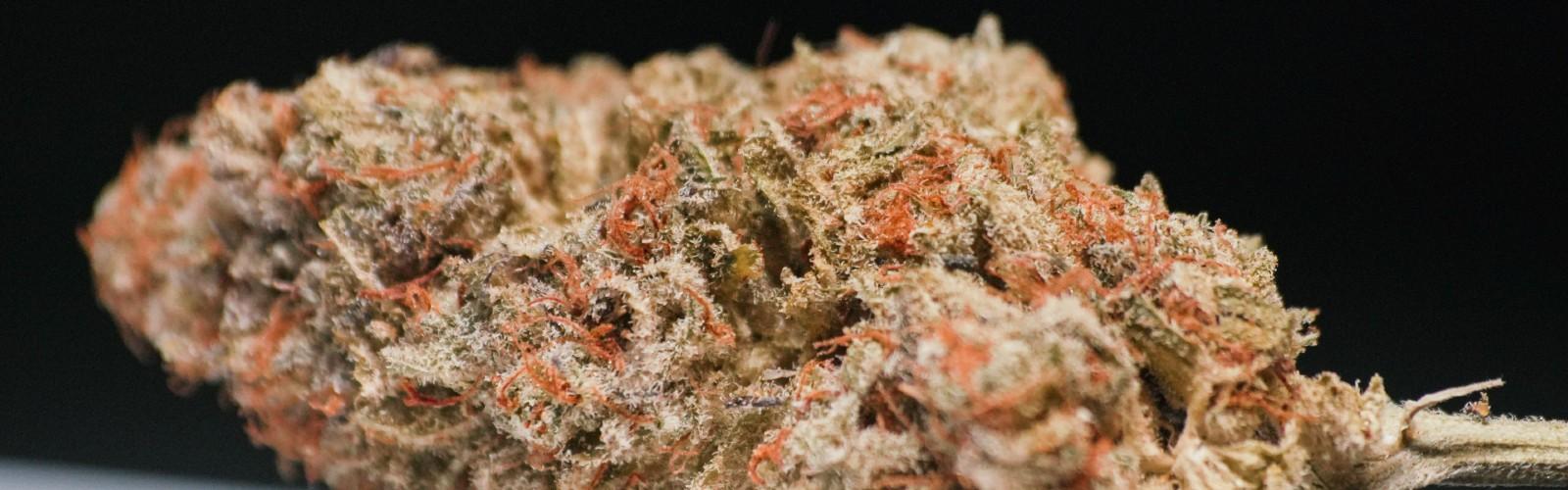
What traits allow a cultivar to consistently express the characteristics we are looking for? To get closer to the answer, we need to look all the way from the surface of the flower down to its DNA-and remember that none of these layers operates in isolation.
Trichomes: Tiny Factories in Action
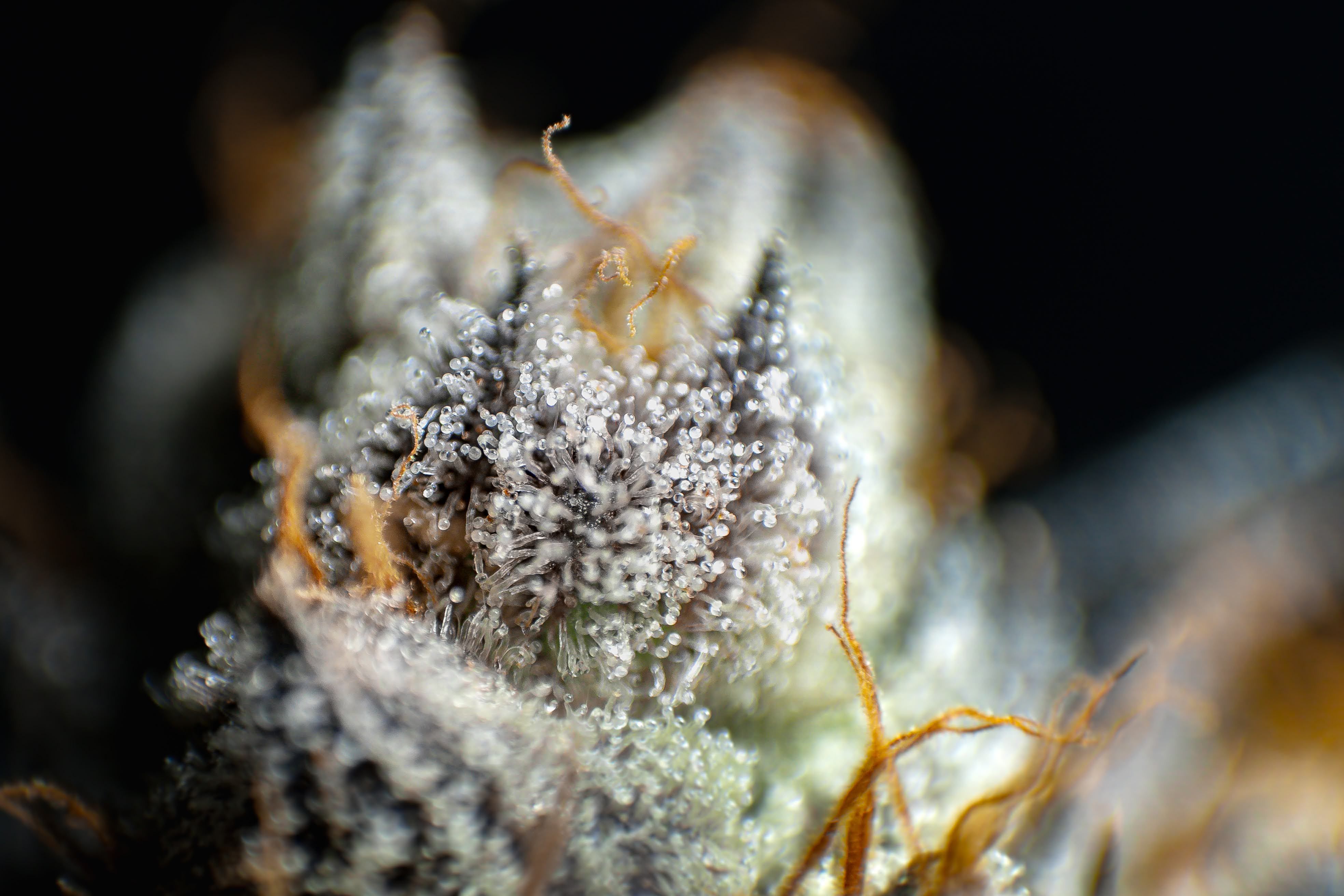
Glandular trichomes are tiny structures found on female cannabis flowers that act as specialized microstructures for the production and storage of cannabinoids and terpenes. They are not simply sticky droplets: they contain secretory cells and a storage cavity beneath the cuticle, where the compounds they produce accumulate.
Thinking of trichomes as "microfactories" helps explain how they work. Their cells take the resources supplied by the plant and transform them, through a series of chemical processes, into compounds such as cannabinoids and terpenes, which then accumulate in a cavity beneath the trichome surface. These cells do not work independently, either: they are interconnected and organized to cooperate extremely efficiently. This is why some scientists describe a mature trichome as a kind of "supercell."
In fresh plant material, cannabinoids such as THC and CBD are found primarily in their precursor forms, known as THCA and CBDA. When the flower is exposed to heat-for example, when smoked, vaporized, or cooked-these molecules lose part of their structure through a process called decarboxylation and are converted into THC and CBD. This is why, when analyzing the composition of a cannabis flower, it is important to distinguish between the compounds originally produced by the plant and those that appear later as a result of processing.
Looking at trichomes can give us clues about the condition and quality of a flower, but appearance alone cannot tell us its precise chemical composition. A cannabis plant may produce flowers covered in trichomes, but that does not necessarily mean it produces higher levels of cannabinoids or terpenes. Trichome type, maturity, and the activity of the cells producing these compounds also play a role. In other words, seeing lots of trichomes does not automatically mean a flower is more potent or higher quality.
Bud Quality Depends on More Than Genetics
When talking about genetics, there are two basic concepts worth distinguishing: genotype and phenotype. The genotype is the genetic information contained within the plant-essentially its DNA-based "instruction set." The phenotype, on the other hand, is how those instructions are ultimately expressed: height, structure, flowering time, yield, cannabinoid and terpene production and composition, and so on. But between genotype and the final result lies a third fundamental factor: the environment. Light intensity and spectrum, temperature, nutrition, growing conditions, and even what happens after harvest-drying, curing, and so on-can all influence the characteristics we ultimately observe. This is why genetics should not be understood as a promise of exact results, but rather as potential.
Two plants with very similar genetics can develop differently when grown under different conditions. This brings us to an important idea when discussing quality: "more" does not always mean "better." A higher concentration of a particular compound or a greater number of trichomes is not, by itself, enough to define an exceptional flower. It is more useful to talk about specific profiles, stability, and consistency in the traits we are looking for.
Cannabis DNA as a Map, Not a Crystal Ball
New genetic tools make it possible to search a plant's DNA for specific signals associated with traits of interest. These are known as genetic markers, and they can be thought of as signs on a map: they tell us that we are close to something we are looking for.
In cannabis, markers have already been identified that can help detect traits such as sex or certain chemotypes at an early stage-in other words, plants with different cannabinoid profiles. This can be extremely useful for breeders, as it allows them to carry out an initial selection without necessarily having to wait for every plant to complete its development.
However, there is an important difference between a region of DNA being associated with a trait and that region being solely responsible for it. Some traits are relatively straightforward to identify genetically, while others are far more complex. Flowering time, plant architecture, resilience, and certain aspects of a plant's chemical profile may depend on many different genes, as well as on how those genes interact with the environment. Genetic studies have already identified regions of DNA associated with traits such as flowering, sex, and cannabinoid production. However, many of these relationships still need to be studied across a broader range of cultivars and growing conditions before we know how widely they can be applied.
This is why DNA analysis can help a breeder decide which plants are worth studying or selecting, but it cannot predict everything. On its own, it cannot guarantee what a flower's final aroma will be, how much a plant will yield, or how a particular genetic line will perform in specific environments. Crossing, cultivation, observation, and selection over successive generations remain essential.
Training the Camera's Eye: Technology in Cannabis Breeding
Technology is also changing the way we observe plants. One of the areas seeing the greatest advances is phenotyping, which essentially means turning the characteristics we observe in a plant into data that can be measured and compared. Traditionally, many selection decisions have relied heavily on experience and the trained human eye. Today, cameras, sensors, and artificial intelligence systems can help count, classify, and track specific traits in a much more systematic way.
For example, AI models already exist that can analyze images, distinguish between different types of glandular trichomes, and quantify them. Technologies such as hyperspectral imaging and near-infrared sensors are also being investigated. A conventional camera essentially records the wavelengths of light visible to the human eye. These systems, by contrast, can capture information across many more spectral bands. Software can then compare those signals with previously analyzed samples and learn to recognize specific patterns. In this way, these technologies can help distinguish between cultivars, identify developmental stages, or even estimate certain components within the plant.
However, this does not mean we can simply point a camera at a bud and automatically determine its potency or chemical composition. These systems need to be trained using reference data, and their accuracy depends on the cultivars used, the type of sample, and the conditions under which the measurements were taken.
For example, one study successfully used hyperspectral imaging to differentiate between five CBD hemp cultivars. This is a promising result, but the experiment was conducted under specific greenhouse conditions. It does not mean that the same system would perform with the same level of accuracy across every cultivar and every growing environment. These technologies could therefore become highly useful tools for breeders and researchers, but an estimate produced by a sensor is not automatically equivalent to a laboratory analysis. Accurately measuring chemical composition still requires validated systems and established reference methods.
Flower Quality Is Also Built After Harvest
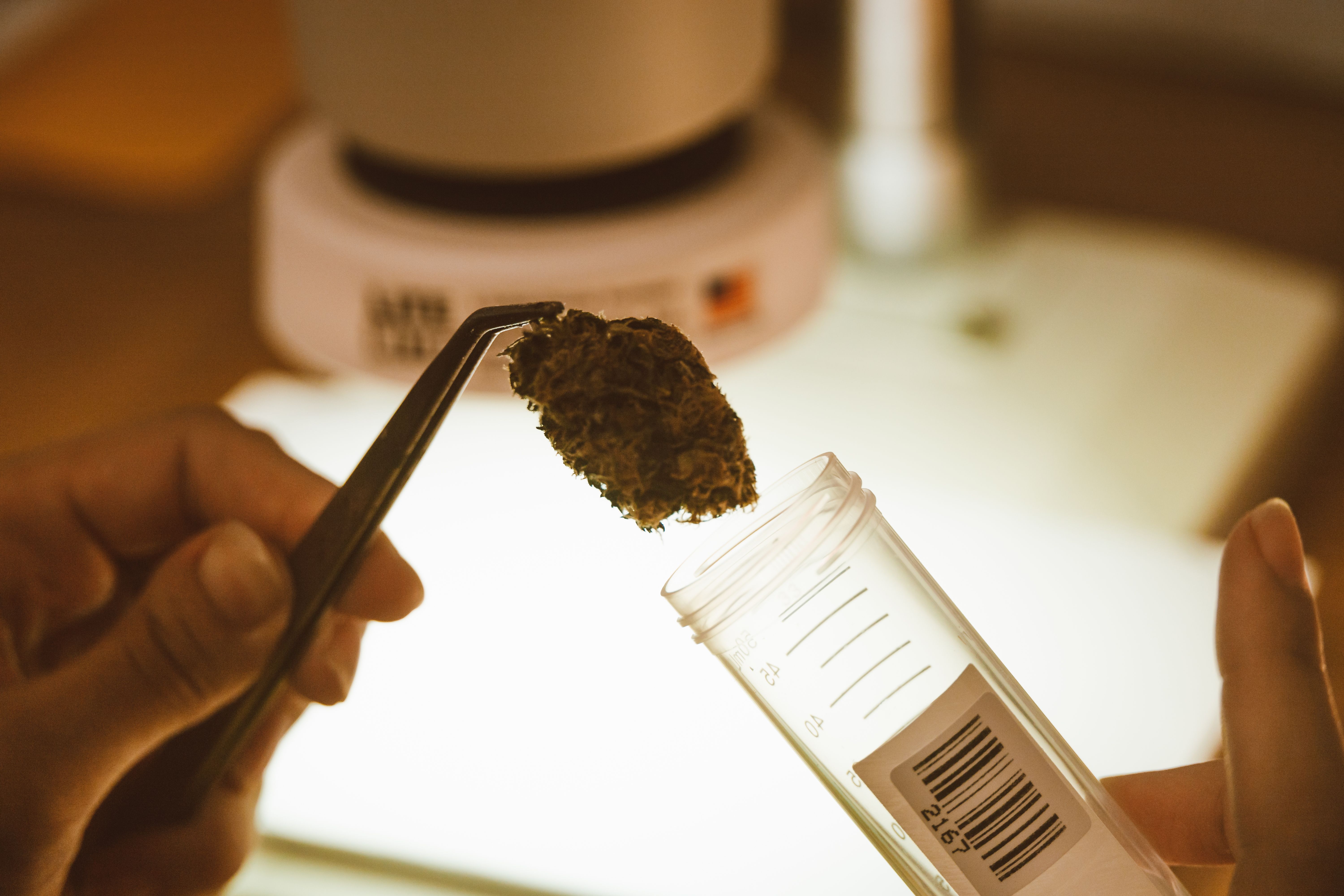
Genetics and cultivation are fundamental, but the final quality of a flower is not set in stone at harvest. What happens after the plant is cut can also alter the final product. Drying, for example, progressively reduces the water content of cannabis buds, but changes in their composition can also occur during this process. Drying conditions may influence the ratio between the acidic and neutral forms of certain cannabinoids and, more broadly, the characteristics the flower ultimately develops.
This is precisely why new ways of monitoring this stage are also being investigated. One study combined hyperspectral imaging with chemical analysis to observe how cannabis changed under different drying conditions. The researchers found that these technologies could detect certain changes and proposed their potential use as tools for monitoring the drying process.
This does not mean there is a single perfect formula for drying cannabis. The takeaway is simpler: consistency in a cultivar does not depend solely on breeding and cultivation; it must also be preserved after harvest. To understand why a flower ultimately develops a particular set of characteristics, we need to consider its genetics and cultivation as well as everything that happens after the plant is cut.
Diversity: The Library of Plant Breeding
When we think about genetic improvement, it is easy to imagine a breeder simply searching for "the plant with the most THC," "the highest-yielding plant," or "the fastest-flowering plant." In reality, cultivar development is far more complex.
Genetic diversity is one of the most valuable tools available to a breeder. Within Cannabis sativa, there is enormous variation in traits related to flowering, plant architecture, adaptation to different environments, and chemical profiles. We can think of this diversity as a vast genetic library, in which each population or line preserves different combinations and variants within its DNA. The larger that library is, the greater the chances of finding traits that may prove useful in the future.
Genomic studies of different cannabis populations have already identified distinct genetic groups and regions of DNA associated with various traits of interest. This does not mean that a landrace automatically has "better genes." Its value lies in preserving a broader gene pool, thereby expanding the genetic possibilities available for plant breeding. A trait that appears relatively unimportant today could become a crucial part of a breeding program tomorrow. This is why preserving this genetic library matters beyond the cultivars currently being bred to meet today's market demands.
Triploid Cannabis: Three Sets of Chromosomes, One Specific Application
Another area of research that has attracted considerable interest in recent years is triploid cannabis. Most cannabis plants studied are diploid, meaning they possess two sets of chromosomes, one inherited from each parent. Triploid plants, by contrast, have three sets of chromosomes. This difference has an interesting consequence: because they have an odd number of chromosome sets, the process through which reproductive cells are formed becomes more complicated. As a result, triploid plants can have significantly reduced fertility.
So, what could this mean for the cannabis industry?
One of the most interesting potential applications is reducing seed formation when plants are exposed to pollen. In field trials involving hemp grown for cannabinoid production, triploid plants produced far fewer seeds than their diploid counterparts when exposed to pollen. However, "far fewer" does not mean none: the triploids were not completely immune to pollination. This distinction matters because triploidy is sometimes surrounded by overly simplified claims. A triploid plant does not automatically produce larger yields or higher cannabinoid concentrations; these outcomes can vary depending on genetics and growing conditions. For now, the evidence points to a much more specific advantage: triploidy could be a useful tool for reducing the risk of seed formation, although not necessarily eliminating it altogether.
CRISPR, TILLING, and the Frontier of What's Possible
When discussing the future of cannabis breeding, CRISPR is probably one of the best-known technologies. However, it is not the only tool being investigated, nor does its emergence mean that traditional breeding methods have become obsolete. Crossing and selection remain the foundation; what these new technologies are doing is adding new tools to the arsenal available to researchers and breeders.
One of these tools is TILLING. Put very simply, TILLING is a method that generates a large number of genetic variations and then uses DNA analysis techniques to identify those that may be of interest. It is somewhat like creating an enormous collection of genetic changes and then searching through them to find which ones produce the effect we are looking for.
CRISPR works differently, as it allows researchers to target a specific region of DNA and modify it. This can be used to investigate the function of a gene or explore whether a particular trait can be altered. CRISPR/Cas9 gene editing has already been used experimentally in Cannabis sativa. However, for the technique to become truly useful, researchers need to be able to regenerate those modified cells into a complete, stable plant capable of passing the change on to its offspring. This is where one of the major current obstacles emerges. The ability to regenerate complete plants from modified cells still depends heavily on the genetics being used, making it difficult to apply this technology routinely across any cannabis cultivar.
All of this demonstrates the enormous potential of these technologies, but it also shows why we should avoid thinking of them as some kind of magic shortcut. There is still a long process of cultivation, selection, and validation between modifying a gene in a laboratory and developing a stable, consistent, and useful cultivar.
Better Questions, Better Decisions
We can learn a great deal simply by looking at a cannabis flower, but a significant part of what determines its characteristics remains beyond what the human eye can see. Trichomes, DNA, environmental conditions, cultivation, post-harvest handling, and genetic diversity are all part of the same system. New tools-from genetic markers and artificial intelligence to hyperspectral imaging and CRISPR-are allowing us to examine some of these layers with a level of precision that would have been difficult to imagine only a few years ago.
But perhaps science's most important contribution is not allowing us to declare that one genetic line will be "better" before it has even been grown, but rather enabling us to ask better questions and gather more information before making decisions. A seed is still not a foolproof promise; it represents genetic potential that must be expressed under specific conditions and demonstrate, generation after generation, that the traits we are looking for are genuinely consistent. New technologies do not replace that process: they help us understand it better and better.
Referencias científicas
[1] Tanney et al. (2021 ). Cannabis Glandular Trichomes: A Cellular Metabolite Factory. Frontiers in Plant Science.
[2] Livingston et al. (2022 ). A polarized supercell produces specialized metabolites in cannabis trichomes. Current Biology.
[3] Toth et al. (2020 ). Development and validation of genetic markers for sex and cannabinoid chemotype in Cannabis sativa L. GCB Bioenergy.
[4] Petit et al. (2020 ). Genetic Architecture of Flowering Time and Sex Determination in Hemp. Frontiers in Plant Science.
[5] de Ronne & Torkamaneh (2025 ). Discovery of major QTL and a massive haplotype associated with cannabinoid biosynthesis in drug-type Cannabis. The Plant Genome.
[6] Huang et al. (2024 ). Deep learning-based quantification and transcriptomic profiling reveal a methyl jasmonate-mediated glandular trichome formation pathway in Cannabis sativa. The Plant Journal.
[7] Lu et al. (2022 ). Hyperspectral Imaging With Machine Learning to Differentiate Cultivars, Growth Stages, Flowers, and Leaves of Industrial Hemp. Frontiers in Plant Science.
[8] Rafiq et al. (2024 ). Non-Destructive Near-Infrared Technology for Efficient Cannabinoid Analysis in Cannabis Inflorescences. Plants.
[9] Yoon et al. (2024 ). Non-destructive assessment of cannabis quality during drying process using hyperspectral imaging and machine learning. Frontiers in Plant Science.
[10] Mostafaei Dehnavi et al. (2025 ). Population genomics of a natural Cannabis sativa L. collection from Iran identifies novel genetic loci for flowering time, morphology, sex and chemotyping. BMC Plant Biology.
[11] Crawford et al. (2021 ). Characteristics of the Diploid, Triploid, and Tetraploid Versions of a Cannabigerol-Dominant F1 Hybrid Industrial Hemp Cultivar. Genes.
[12] Suchoff et al. (2024 ). Characterization of agronomic performance and sterility in triploid and diploid cannabinoid hemp. Agronomy Journal.
[13] Fernandes et al. (2023 ). Cultivar-dependent phenotypic and chemotypic responses of drug-type Cannabis sativa L. to polyploidization. Frontiers in Plant Science.
[14] Zhang et al. (2021 ). Establishment of an Agrobacterium-mediated genetic transformation and CRISPR/Cas9-mediated targeted mutagenesis in Hemp. Plant Biotechnology Journal.
[15] Duarte-Delgado et al. (2025 ). TILLCANN: a TILLING platform in Cannabis sativa for mutation discovery and crop improvement. Molecular Horticulture.
Comments from our readers
There are no comments yet. Would you like to be the first?
Leave a comment!Did you like this post?
Your opinion about our seeds is very important to us and can help other users a lot (your email address won't be made public).