

- For years, much of the evolution of indoor cultivation has revolved around a single idea: more light equals higher yields.
- First came higher-powered HPS lamps, followed by LED systems capable of delivering PPFD levels that would have seemed unimaginable just a decade ago. Their arrival marked a true revolution: lower grow-room temperatures, reduced energy costs, comparable yields, and improved flower quality.
- However, as cannabis research continues to advance, it is becoming increasingly clear that light intensity is only one piece of the equation.
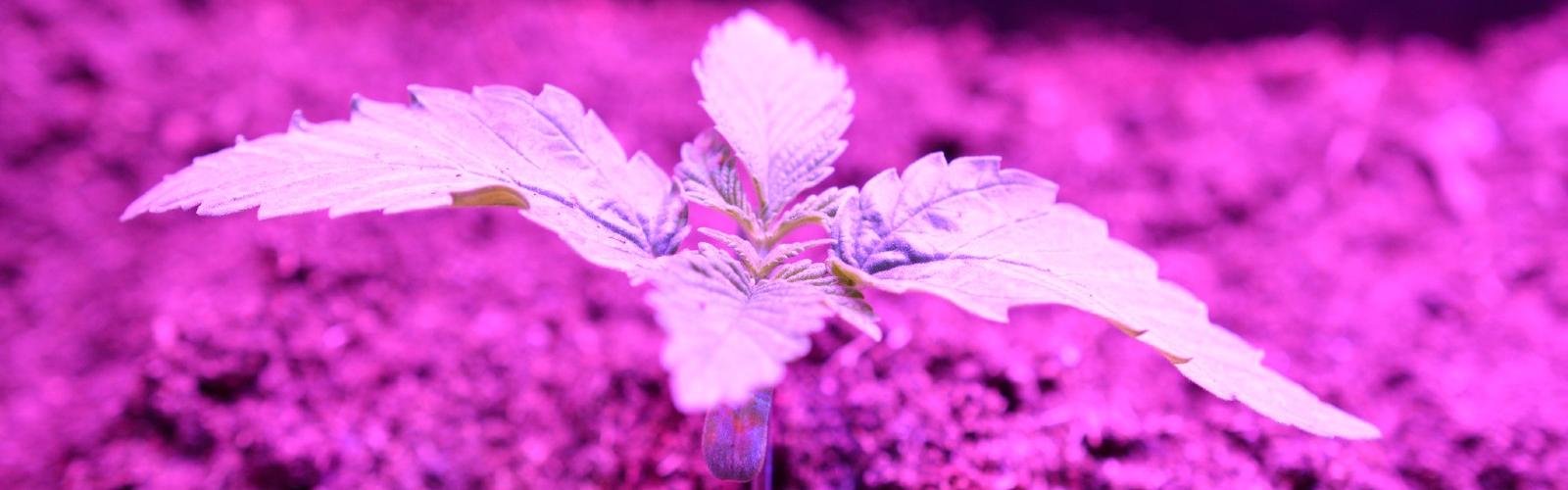
For years, much of the evolution of indoor cultivation has revolved around a single idea: more light equals higher yields. First came higher-powered HPS lamps, followed by LED systems capable of delivering PPFD levels that would have seemed unimaginable just a decade ago. Their arrival marked a true revolution: lower grow-room temperatures, reduced energy costs, comparable yields, and improved flower quality. However, as cannabis research continues to advance, it is becoming increasingly clear that light intensity is only one piece of the equation.
Does Light Intensity Matter More Than Spectrum?
As discussed in our previous article, cannabis plants do not perceive all wavelengths of light in the same way. For a cannabis plant, light is not merely a source of energy for photosynthesis-it is also information. Through a range of photoreceptors, cannabis interprets the spectral composition of light to regulate processes as diverse as vegetative growth, flowering, resin production, and cannabinoid biosynthesis.
A recent study published in the scientific journal Industrial Crops & Products provides new evidence supporting this concept. Researchers investigated how different ratios of blue and red light affect not only the growth of a CBD-rich cannabis variety but also the physiological and molecular mechanisms that ultimately determine cannabinoid production.
The findings are particularly noteworthy because they challenge a widely held assumption among growers: that increasing light intensity is always the best strategy for improving yields. In reality, certain LED spectra matched-or even outperformed-some of the parameters achieved under more intense full-spectrum lighting systems, while consuming significantly less energy.
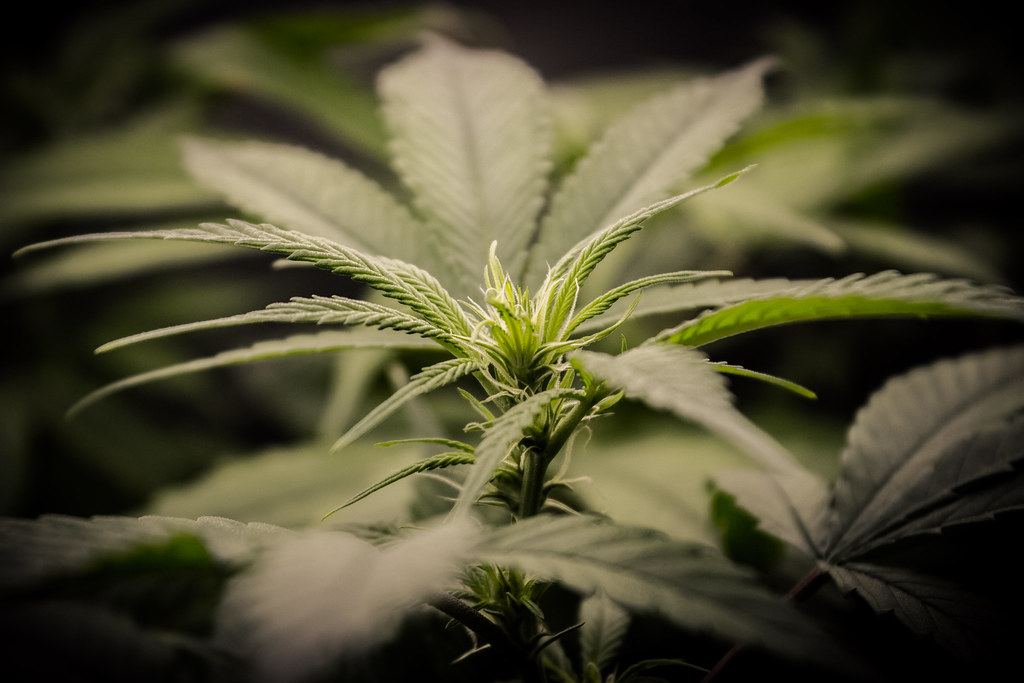
Surprisingly, Cannabis Leaves Hold the Key to Producing More Cannabinoids
When discussing cannabinoid production, most attention is typically focused on flowers and trichomes, since these glandular structures are responsible for producing the resin that growers value so highly. This makes perfect sense, as compounds such as THC, CBD, and terpenes are synthesized and accumulated there. However, the story begins much earlier.
All the energy required to produce cannabinoids originates from photosynthesis taking place in the leaves. The more efficient this process is, the more carbon and energy become available to fuel the metabolic pathways that ultimately lead to resin production. This is precisely where the study offers one of its most interesting insights. Researchers observed that the most effective lighting conditions not only improved flower and CBD production but also induced profound physiological changes in the leaves themselves.
Under specific combinations of blue and red light, plants exhibited higher photosynthetic rates, greater activity in the machinery responsible for capturing light energy, and increased accumulation of energy reserves in the form of starch. Put simply: the leaves functioned more efficiently.
This improvement in photosynthetic efficiency did not merely enhance plant growth. It also triggered greater activation of genes involved in energy metabolism, electron transport, and the production of metabolic precursors required for cannabinoid biosynthesis. The researchers concluded that plants capable of utilizing light more efficiently have more resources available to invest in the production of secondary metabolites such as CBD.
The Best Blue-to-Red Ratios for Increasing CBD Production in Cannabis Cultivation
One of the main objectives of the study was to determine which proportions of blue and red light generate the most favorable responses. To achieve this, researchers compared several LED lighting ratios, including balanced spectra as well as others clearly dominated by one of the two colors.
The results showed that the Blue/Red 5:5 and Blue/Red 2:8 ratios provided the best overall balance between plant growth, flower production, and CBD accumulation. Both lighting spectra produced significant increases in total CBD content while simultaneously stimulating the expression of genes involved in cannabinoid biosynthesis.
Interestingly, the spectrum with the highest proportion of blue light (8:2) did not deliver the best results. Although it increased the production of certain minor cannabinoids, flower yield was lower and total CBD production failed to reach the levels observed in plants exposed to more balanced light spectra.
This finding is particularly relevant because growers have long assumed that increasing the proportion of blue light automatically enhances resin and cannabinoid production. According to this study, however, the reality appears to be considerably more complex.
Blue light plays essential roles in metabolic regulation, stomatal opening, and various plant stress-response mechanisms. However, when its proportion becomes excessive, it may limit certain processes related to biomass production. Red light, by contrast, promotes vegetative expansion, enhances carbon accumulation, and stimulates overall plant growth. When both wavelengths are combined in the right proportions, a form of physiological synergy appears to occur, allowing growers to benefit from the advantages of both.
Can a 600 PPFD LED Outperform a 1000 PPFD Fixture?
This is arguably the most surprising aspect of the entire study.
The Blue/Red 5:5 and Blue/Red 2:8 lighting treatments operated at an intensity of approximately 600 μmol/m²/s. Another group of plants was cultivated under full-spectrum LED lighting at an intensity of 1000 μmol/m²/s.
At first glance, it might seem obvious which setup should produce superior results. However, the data told a different story.
Plants grown under the optimized blue-red spectra (600 μmol/m²/s) exhibited photosynthetic rates comparable to-and in some physiological parameters even greater than-those achieved under the high-intensity full-spectrum treatment.
The researchers recorded significant improvements in indicators such as maximum Rubisco carboxylation rate, electron transport rate, and triose phosphate utilization. All of these parameters are directly linked to photosynthetic efficiency.
These findings suggest that not all of the electrical energy consumed by a lighting fixture is necessarily converted into plant growth. If a substantial portion of the emitted radiation falls within wavelengths that are less efficient for photosynthesis, significantly higher light intensities may be required to achieve similar results.
From a grower's perspective, this conclusion has major implications. A better-optimized spectrum could potentially deliver equivalent yields while consuming less energy, offering a valuable opportunity to reduce electricity costs.
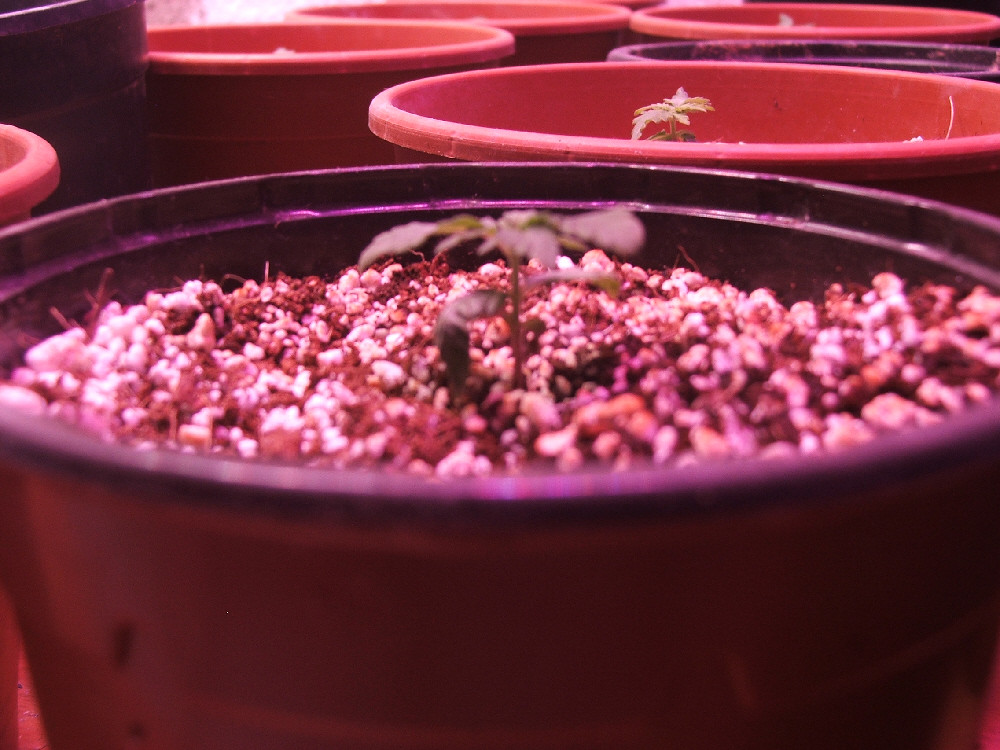
What This Study Means for Indoor Cannabis Growers
Although the research was conducted on a CBD-rich variety under controlled experimental conditions, its broader conclusions are relevant to many types of indoor cultivation.
First, the study confirms that light spectrum deserves as much attention as fixture power and light intensity.
Second, it demonstrates that spectra dominated excessively by a single wavelength do not necessarily produce the best outcomes. Balanced combinations of blue and red light appear to generate more favorable physiological responses than either extreme.
The findings also reinforce the importance of viewing cultivation as an integrated biological system. Cannabinoid production is not determined solely by what happens inside the flowers. Leaf health, photosynthetic efficiency, and overall energy metabolism are equally critical factors.
Finally, the results suggest that future optimization strategies may focus increasingly on spectral quality rather than simply increasing light intensity.
The Future of LED Lighting in Medical Cannabis Production
The cannabis industry is currently moving toward increasingly precise cultivation systems.
For many years, genetic improvement was the primary driver of higher yields. This was followed by advances in fertigation, climate control, and automation. Now, the next major leap forward may come from the field of precision lighting.
LED technology offers something no previous lighting system has been able to provide: the ability to design highly customized light spectra.
As our understanding of cannabis responses to specific wavelengths continues to improve, it will become possible to develop lighting systems tailored not only to each stage of cultivation but also to specific production goals.
Some growers may prioritize biomass production. Others may seek to maximize the concentration of specific cannabinoids. Others may focus on enhancing particular terpene profiles.
What this study clearly demonstrates is that light should no longer be viewed solely as an energy source. It is also a powerful tool for metabolic regulation, capable of profoundly influencing plant physiology.
And all evidence suggests that we are only beginning to understand the full extent of its potential.
Comments from our readers
There are no comments yet. Would you like to be the first?
Leave a comment!Did you like this post?
Your opinion about our seeds is very important to us and can help other users a lot (your email address won't be made public).