

- For years, indoor cannabis cultivation followed a simplistic rule: more watts equal more production.
- Modern photobiology has shown that cannabis responds not only to light intensity, but also to the biological information encoded within the spectrum itself.
- That is where precision photobiology enters the conversation — and why advanced growers are increasingly paying attention to it.
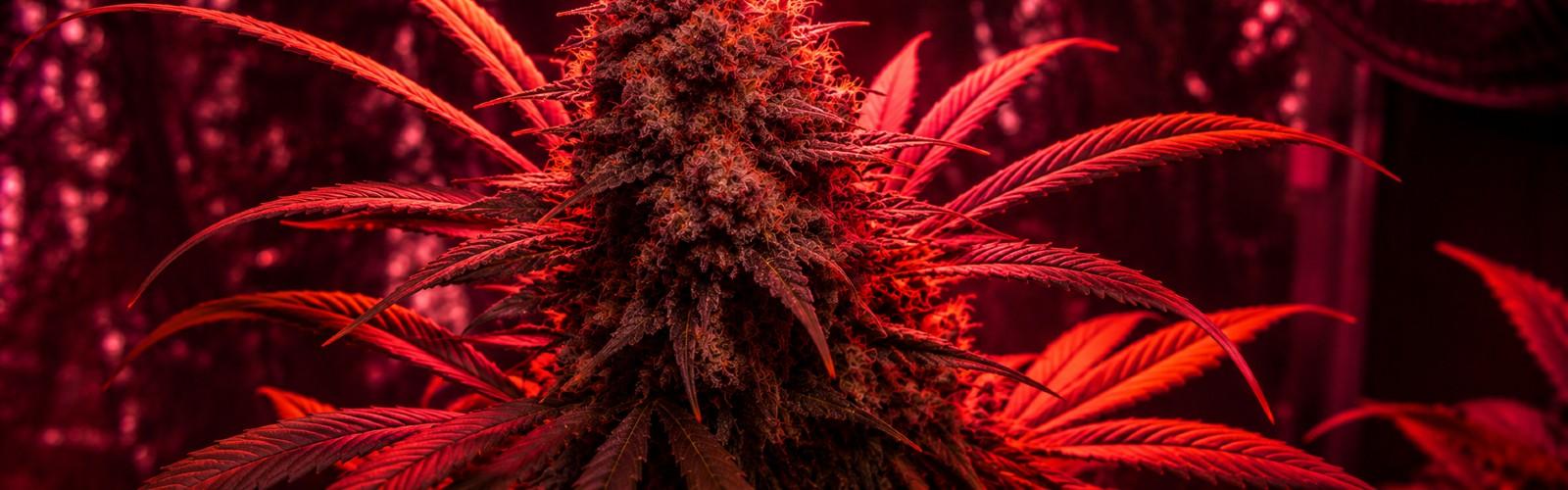
Modern plant science has shown that specific wavelengths of light can alter the physiological behavior of cannabis plants without changing nutrients, genetics, or environmental parameters such as temperature. In other words, light is not just energy for photosynthesis - it is also biological information.
Certain spectral signals are capable of reshaping plant architecture, regulating flowering, and activating defense responses linked to resin production. That last effect is precisely what has made photobiology such a fascinating topic for advanced cannabis cultivators.
Among all spectral regions, two have generated enormous interest in recent years: UV-B radiation and far-red light. The internet quickly turned both into simplified cultivation myths:
- "More UV equals more THC"
- "Far-red magically accelerates flowering"
- "Stress automatically produces more resin"
But the scientific reality is far more nuanced - and considerably more interesting.
Yes, light can be used to manipulate very specific physiological responses in cannabis. However, when applied incorrectly, those same spectral tools may reduce yield, impair photosynthesis, or trigger unproductive stress responses.
In precision cultivation, the difference between beneficial stimulation and actual damage can be measured in just a few nanometers.
Cannabis Plants Do Not "See Colors" - They Interpret Biological Signals
When growers talk about light spectrums, they often think in terms of colors. Cannabis plants, however, do not perceive light the way humans do. For the plant, light functions primarily as information.
Different wavelengths activate different photoreceptors that regulate specific physiological processes:
- Photosynthesis
- Stem elongation and morphology
- Circadian rhythms
- Flowering responses
- Defense signaling
One of the most important photobiological systems in cannabis cultivation is the phytochrome system, which acts as a molecular switch sensitive mainly to two spectral regions:
- Red light (~660 nm)
- Far-red light (~730 nm)
This pigment exists in two forms:
- Pr (inactive form)
- Pfr (active form)
During the day, red light converts phytochrome into its active state. During darkness, it gradually reverts back to its inactive form. Cannabis plants use this transition to biologically "measure" the length of the night.
Technically speaking, photoperiod cannabis plants do not flower simply because they receive fewer hours of light. They flower because they detect sufficiently long nights. The phytochrome system is one of the biological tools the plant uses to interpret that photoperiod.
This means advanced cultivators can partially manipulate flowering signals using highly specific light spectrums.
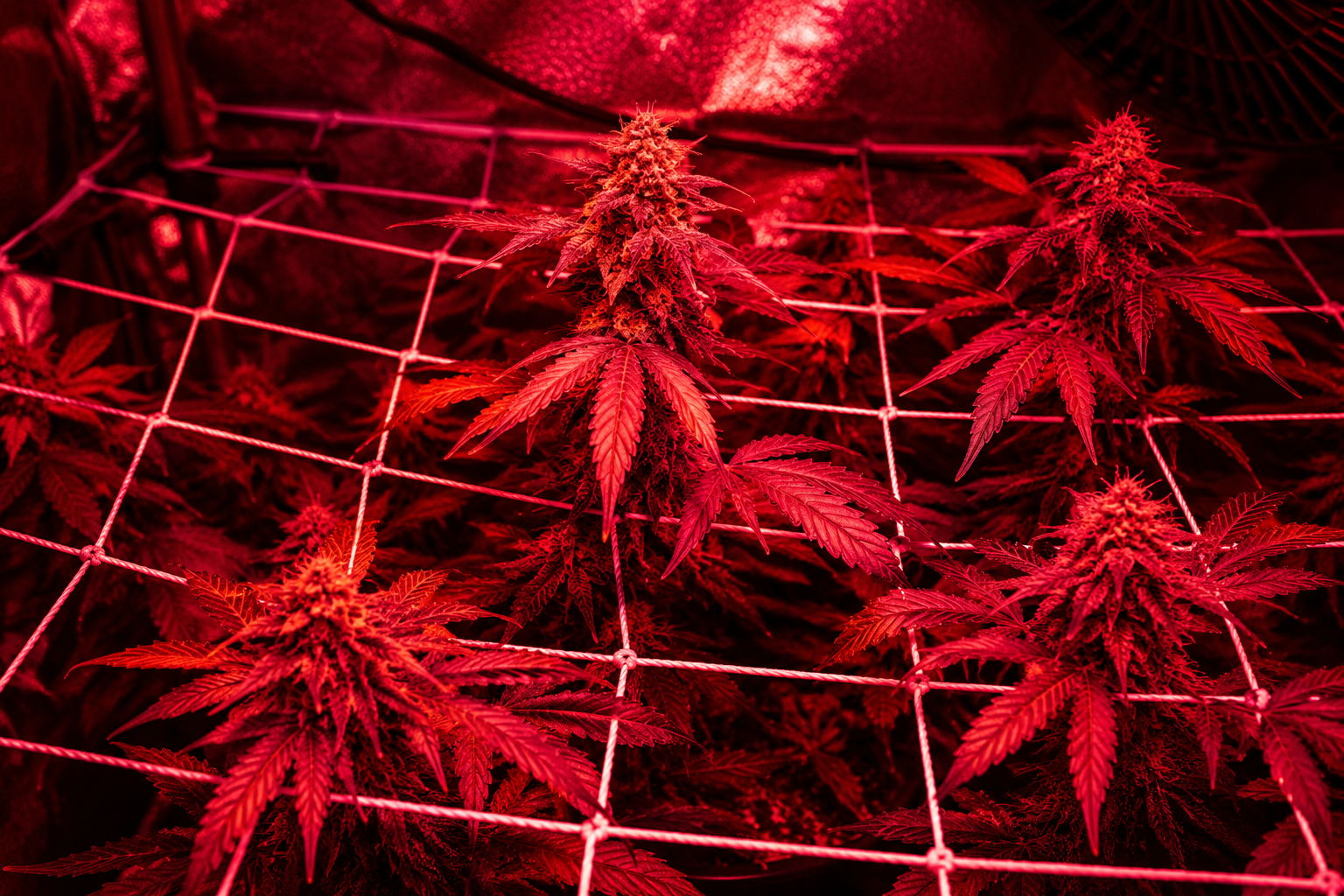
The UV-B Myth in Cannabis Cultivation: Does It Really Increase Resin Production?
For years, the cannabis community embraced a seemingly logical theory: because ultraviolet radiation represents a threat to plant tissues in nature, cannabis would respond defensively by producing more trichomes and more protective compounds, including cannabinoids and terpenes.
Biologically speaking, the theory makes sense. Trichomes - the glandular structures where cannabinoids, terpenes, and flavonoids are synthesized and stored - do play a protective role against radiation, oxidative stress, and environmental threats.
The problem is that plausible theories do not always survive modern data.
Recent studies involving commercial cannabis cultivars have started challenging this simplified narrative. Current evidence suggests that UV-B exposure does not consistently increase cannabinoid levels or flower yield. In many cases, the opposite occurs.
Once UV-B intensity or exposure duration exceeds certain thresholds, typical photodamage responses begin to appear:
- Reduced photosynthetic efficiency
- Chlorosis
- Leaf deformation
- Oxidative stress
- Reduced vegetative growth
- Lower overall yield
This highlights a critical concept many growers overlook: plants can defend themselves - but defense requires energy that is no longer available for flower development.
That is why the real objective is not to "stress plants as much as possible," but rather to identify the delicate point where defensive signaling still occurs without crossing into metabolic damage.
Positive Stress in Cannabis Cultivation: Why Less Is Often More
This concept is closely related to hormesis - a biological phenomenon in which low doses of a stressor trigger adaptive and potentially beneficial responses, while excessive doses become harmful.
That is essentially how UV-B supplementation works in cannabis cultivation.
A very moderate and carefully controlled UV-B exposure may stimulate certain protective pathways without severely compromising photosynthesis. However, the safety margin is extremely narrow, and the response depends heavily on the cultivar being grown.
Not all cannabis genetics react the same way to UV-B radiation.
Some cultivars show strong sensitivity even at relatively low intensities, while others tolerate the stimulus more effectively. Factors such as:
- Genetics
- Leaf density
- Environmental adaptation
- Baseline trichome production
all appear to influence the plant's response.
That is why blindly copying "universal UV recipes" rarely makes sense in advanced cannabis cultivation.
How to Truly Improve High-Quality Resin Production
Increasing resin production is not simply about producing more visible trichomes. What actually matters is whether that resin contains higher concentrations of valuable compounds such as cannabinoids and terpenes.
More resin does not automatically mean more potency.
Likewise, a denser trichome layer does not always translate into higher total chemical yield. To understand why, growers first need to understand what trichomes actually are.
Cannabis glandular trichomes function as microscopic biochemical factories where the plant synthesizes and accumulates:
- THCA
- CBDA
- Minor cannabinoids
- Terpenes
- Flavonoids
- Secondary aromatic compounds
These compounds are not produced "for the grower." They are part of the plant's evolutionary survival mechanisms. Resin itself is fundamentally a biological defense system.
That is why attempting to manipulate resin production through a single spectral variable is an oversimplification. Resin biosynthesis depends simultaneously on multiple interconnected factors:
- Genetics
- Total light intensity
- DLI (Daily Light Integral)
- Temperature and VPD (Vapor Pressure Deficit)
- Nutrition
- Root health
- Environmental stress management
- Flower maturation
Supplemental lighting can modulate responses, but it cannot replace the full set of conditions required for healthy plant development.
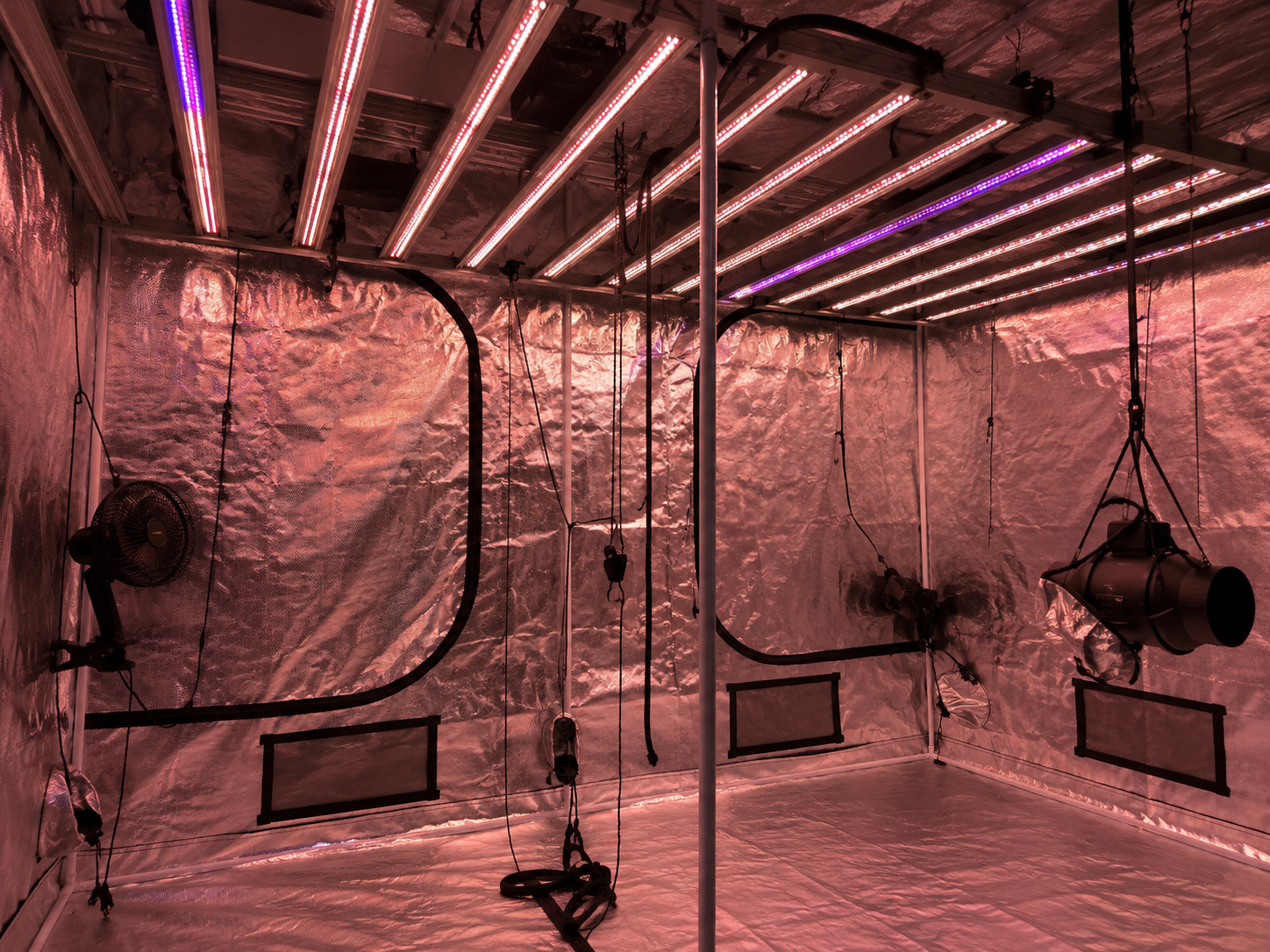
What Is Far-Red Light?
If UV-B has often been overhyped, far-red light has probably been misunderstood.
For years, far-red wavelengths were considered almost irrelevant because they sit outside the traditional PAR range (400–700 nm). However, recent research has radically changed that perception.
Far-red light is not merely "leftover light." It acts as an important environmental signal interpreted by the plant.
In nature, when a plant becomes shaded by surrounding vegetation, the canopy absorbs much of the red light while allowing proportionally more far-red light to pass through. The plant interprets this shift as competition for space and sunlight.
Its response is immediate:
- Stem elongation
- Leaf expansion
- Accelerated vertical growth
- Light-seeking behavior
This mechanism is known as the shade avoidance response.
Indoor cannabis cultivators can strategically exploit this biological response - but there is an important distinction between using far-red light throughout the entire photoperiod and applying it only at the end of the light cycle.
The second approach is where precision photobiology becomes truly interesting.
End-of-Day Far-Red: Manipulating the Cannabis Biological Clock
One of the most promising photobiological techniques in modern cannabis cultivation is known as End-of-Day Far-Red (EOD-FR).
By applying a brief exposure to far-red light (~730 nm) during the final minutes of the light cycle, growers can accelerate the conversion of active phytochrome into its inactive state, effectively simulating the faster arrival of biological night.
In practical terms, the plant "interprets" that darkness has begun earlier than the actual timer indicates.
Research on various photoperiod-sensitive species suggests this type of spectral manipulation can influence circadian regulation and flowering behavior. In cannabis specifically, recent studies indicate that end-of-day far-red treatments may positively affect flowering transition and certain developmental processes.
From a cultivation standpoint, the goal is not to reduce useful photosynthetic hours, but rather to help the plant recognize nighttime sooner while maintaining a relatively high Daily Light Integral.
This may potentially:
- Encourage a faster flowering transition
- Help manage part of the initial flowering stretch
- Slightly optimize crop timing
- Maintain strong overall light energy input
Far-red lighting is not a miracle technique. It is a precision tool that can help experienced cultivators fine-tune specific developmental responses without significantly compromising final yield.
The Future of Indoor Cannabis Cultivation Is Not More Power - It Is More Precision
For decades, indoor cannabis cultivation has been obsessed with large numbers:
- More PPFD
- More watts
- Higher yields per square meter
But modern plant science increasingly points in another direction.
The future of cannabis cultivation may not belong to the growers using the most powerful fixtures, but to those who best understand how plants biologically interpret light signals.
True mastery does not come from aggressively "punishing" the plant with stress.
It comes from understanding the plant deeply enough to deliver the right signal, at the right intensity, at precisely the right moment.
Comments from our readers
There are no comments yet. Would you like to be the first?
Leave a comment!Did you like this post?
Your opinion about our seeds is very important to us and can help other users a lot (your email address won't be made public).