

- Choosing the right harvest time is one of the most important decisions you'll make during the entire cultivation cycle, as it has a direct impact on both yield and the final quality of your flowers.
- Harvest too early and you'll sacrifice both weight and cannabinoid development. Harvest too late and the uplifting effect of your favourite sativa may gradually become heavier and more sedative, while prolonged exposure to autumn rain also increases the likelihood of mould and fungal diseases.
- The good news is that not every cannabis genetic follows the same biological clock. Today's seed market offers an enormous range of options. In this guide, we'll explore the three main categories you'll find in virtually every modern seed catalogue—autoflowering, classic photoperiod and Fast/Quick photoperiod varieties—so you'll know what to expect from each one and how to identify the ideal outdoor harvest window for your plants.
The Three Biological Clocks of Cannabis
Before looking at specific harvest dates, it's important to understand why each type of cannabis genetics behaves differently:
- Autoflowering strains (ruderalis genetics): These plants flower automatically regardless of how many hours of daylight they receive. Their lifespan is genetically predetermined, so they do not require a change in the light cycle to begin flowering. No matter how long the days are, they will naturally enter the flowering stage after approximately 3–4 weeks from germination and usually complete their entire life cycle within 8–11 weeks.
- Classic photoperiod strains: These varieties require the dark period to exceed a certain threshold-typically around 11–12 hours of uninterrupted darkness-to trigger flowering. Outdoors in the Northern Hemisphere, this happens naturally from late August onwards.
- Fast / Quick photoperiod strains: These are photoperiod-dependent plants (not autoflowering) that have been selectively bred to shorten the flowering stage. Like any standard photoperiod variety, they still rely on the natural reduction in daylight hours to initiate flowering. However, once flowering begins, they finish several weeks earlier than the original version of the same genetics. They represent an excellent middle ground for growers living in regions with short summers or for anyone who wants an earlier harvest without sacrificing the benefits of full photoperiod genetics.
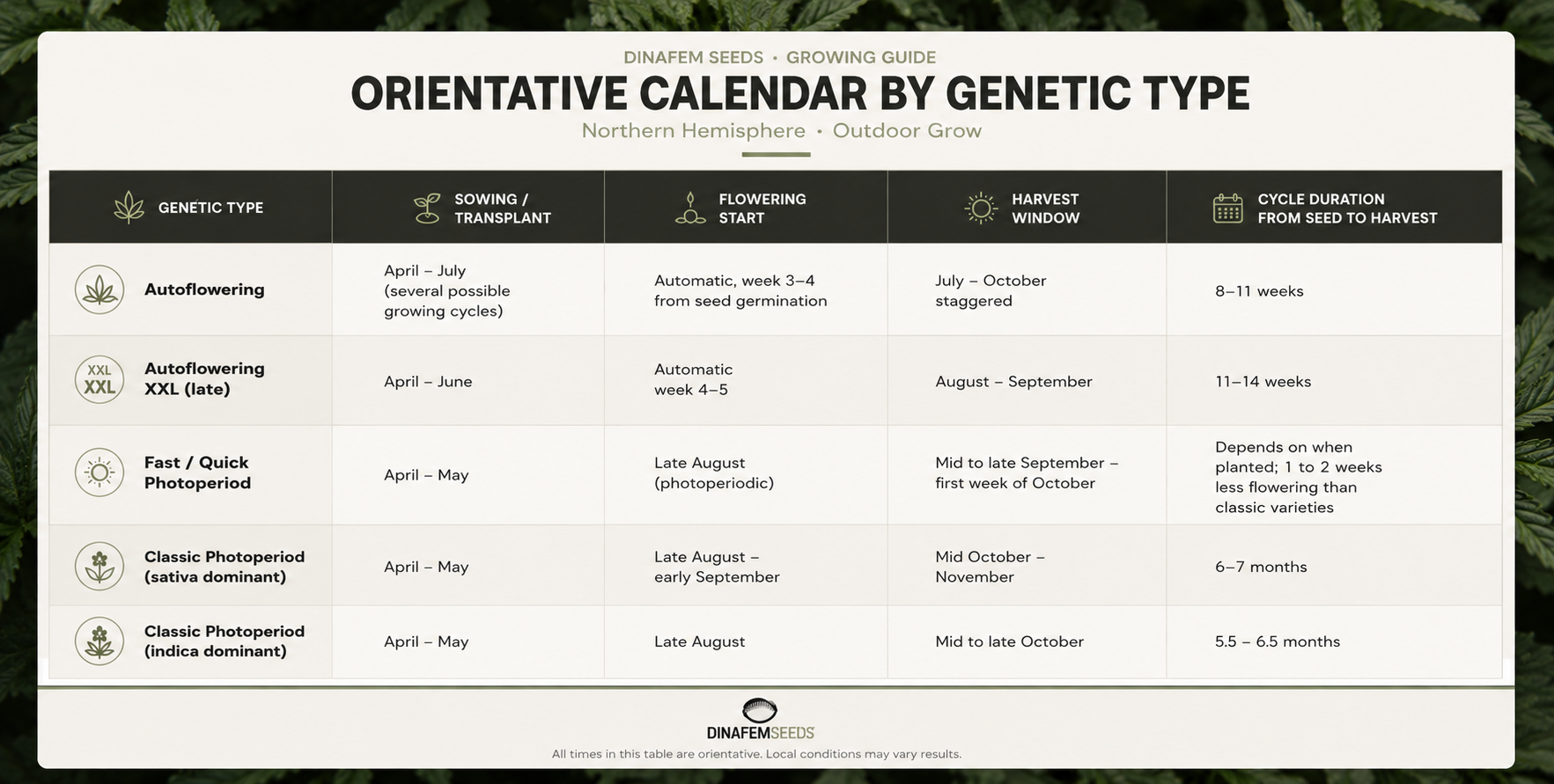
The dates shown are intended as a general guide for temperate Mediterranean and Atlantic climates. In continental regions with early winters, consider germinating earlier and prioritising autoflowering or Quick varieties to ensure your plants finish before prolonged rain and poor weather affect the final weeks of flowering.
Autoflowering Strains: Fast Cycles That Allow Multiple Harvests
One of the greatest advantages of autoflowering genetics is that, because they are completely independent of the photoperiod, they can be sown several times throughout the same growing season (April, May and June), allowing growers to stagger their harvests from July through October.
They are the safest option if you're looking for predictable results in just two to three months while avoiding the risks associated with autumn weather.
Another important advantage is their increased resilience against pests. Since their life cycle is significantly shorter, they often complete their development before many pest populations reach their peak. Their main drawback is yield: individual plants generally produce less than photoperiod varieties, although modern XXL autoflowering lines have considerably narrowed that gap.
When Should You Harvest an Autoflowering Cannabis Plant?
Harvest when most trichomes have turned milky, around 10–20% have become amber, and approximately 70–80% of the pistils have darkened and curled back into the buds.
Fast / Quick Flowering Strains: The Sweet Spot Many Growers Are Looking For
This category often creates the most confusion among cannabis growers because Fast and Quick varieties are frequently mistaken for autoflowering strains. The distinction is crucial: Fast or Quick genetics still require the natural shortening of the days at the end of summer to initiate flowering, just like any other photoperiod plant.
The difference is what happens afterwards. Once flowering begins, these varieties usually finish around two-and sometimes even three-weeks earlier than the standard version of the same genetics.
In practical terms, this means outdoor harvests are typically ready during the last week of September or the first week of October, just before autumn rains become a serious concern across most temperate climates.
Advantages of Fast Flowering Seeds Outdoors
- They reduce the period during which buds are exposed to Botrytis (grey mould), since the optimal harvest date arrives several weeks earlier than with standard photoperiod varieties.
- They retain the same genetic profile and terpene/cannabinoid characteristics as their classic photoperiod counterparts.
- They make outdoor cultivation possible in continental or mountainous climates, where long-flowering photoperiod varieties often struggle to finish before the first frosts arrive.
When Should You Harvest a Fast or Quick Flowering Cannabis Plant?
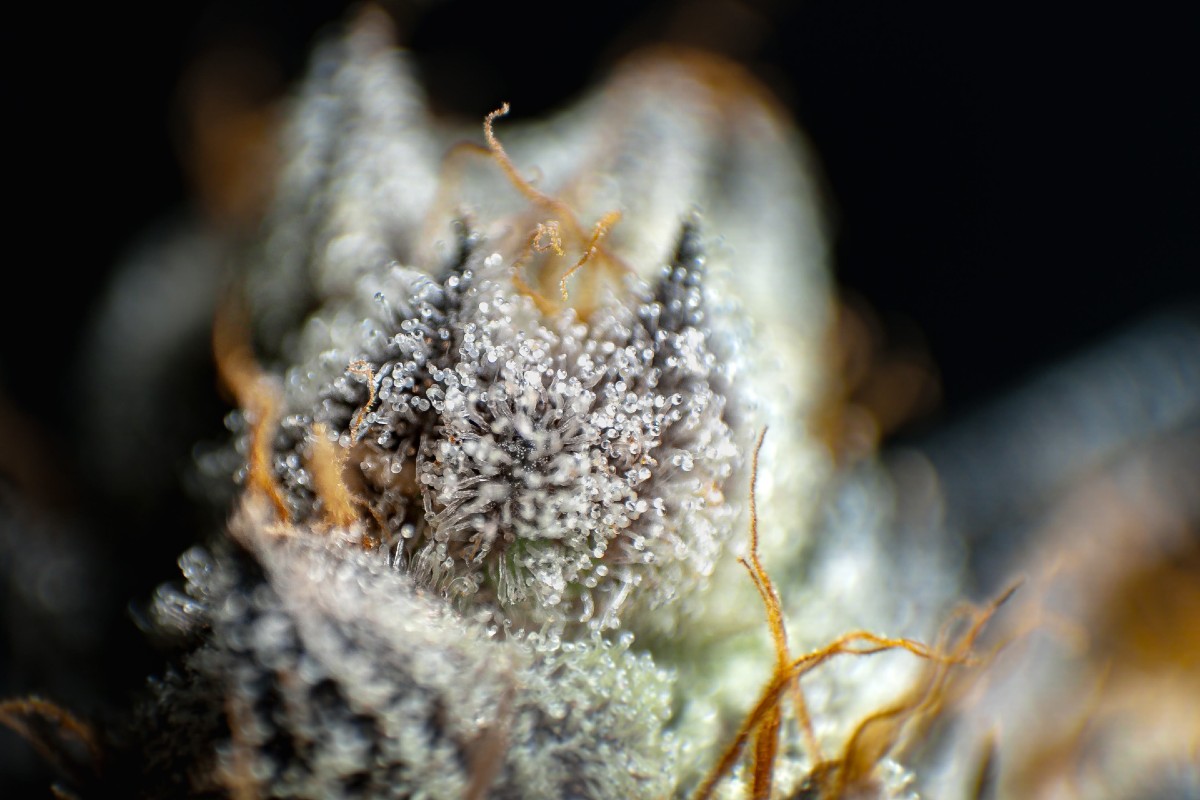
Just as with classic photoperiod strains, always rely on the trichomes rather than the calendar. Watch them transition from clear to cloudy, with the percentage of amber depending on the type of effect you're aiming for. While the breeder's recommended flowering time is a useful guideline, you should always verify maturity yourself by carefully inspecting the plants in person.
Classic Photoperiod Strains: The Best Choice for Yield and Flavour Complexity
Classic photoperiod genetics require the longest growing season, but they also tend to deliver the highest yields and the richest aromatic profiles, especially long-flowering sativa-dominant varieties. Outdoors, they naturally begin flowering towards the end of August and are not ready for harvest until well into October-or even November in the case of many sativa-dominant cultivars.
The main challenge with these varieties is the weather. If you live in an area where autumn rain arrives early, long-flowering photoperiod strains may spend their final weeks of flowering exposed to excessive humidity, precisely when dense buds are most vulnerable to mould.
For this reason, growers in northern or wetter climates often favour indica-dominant varieties, which finish earlier, or choose Fast or autoflowering versions of the same genetics to reduce the risk.
How to Plan Your 2026 Outdoor Harvest by Combining All Three Genetic Types
Many experienced growers combine different types of cannabis genetics to spread both their harvests and the associated risks throughout the season.
- April: Plant your classic photoperiod and Fast/Quick varieties (both are transplanted at the same time).
- April–July: Sow successive batches of autoflowering plants to enjoy continuous harvests starting as early as July.
- Late September – Early October: Harvest your Fast/Quick varieties before the first autumn rains arrive.
- Mid-October – November: Harvest your classic photoperiod plants while paying particular attention to moisture management. Windbreak netting, temporary rain covers or other protective measures can make a significant difference if prolonged rainfall is forecast.
There is no single outdoor cannabis harvest date for 2026. Instead, the ideal harvest window depends entirely on the genetics you choose to grow.
Autoflowering strains offer speed and flexibility. Fast/Quick photoperiod genetics provide perhaps the best compromise between preserving the full characteristics of traditional photoperiod varieties while reducing exposure to autumn weather. Classic photoperiod strains remain the benchmark whenever maximum yields and the most complex terpene profiles take priority over finishing early.
Whichever genetics you choose, one rule always remains the same: your magnifying loupe-and the condition of the trichomes-should always have the final say on the exact harvest date, regardless of what any calendar suggests.
Frequently Asked Questions About the Perfect Harvest Time for Every Cannabis Genetic Type
How do I know when an autoflowering cannabis plant is ready to harvest?
Inspect the trichomes using a jeweller's loupe or microscope (30x–60x magnification). When most of them have turned milky and only around 10–20% have become amber, while roughly 70–80% of the pistils have darkened and curled back into the buds, the plant has generally reached its optimal harvest window. The estimated life cycle of 8–11 weeks from germination should always be treated as a guideline rather than an absolute rule.
Do Fast/Quick photoperiod strains require a change in the light cycle to start flowering?
Yes. Unlike autoflowering varieties, Fast/Quick strains are still photoperiod-dependent. They require longer nights to trigger flowering-naturally outdoors from late August onwards in the Northern Hemisphere, or artificially indoors by switching the lighting schedule to 12 hours of light and 12 hours of darkness. Their defining characteristic is simply that, once flowering begins, they mature several weeks earlier than the standard version of the same genetics.
Can I make a classic photoperiod plant flower earlier to avoid autumn rain?
Yes. Flowering can be induced earlier using a technique known as light deprivation, which consists of covering the plants to artificially extend the dark period. This method generally requires a greenhouse or another structure capable of completely blocking light. If you prefer a simpler solution, choosing the Fast/Quick version of the same genetics is usually the easiest alternative.
Can I rely on the harvest calendar alone to know when to harvest my cannabis plants?
No. A harvest calendar is an excellent planning tool that helps you organise your growing season and choose the right genetics for your climate, but it should never be used as the sole indicator of maturity.
The exact harvest window should always be confirmed by examining the trichomes with magnification. Environmental conditions, cultivation techniques and plant health can all slightly influence the speed at which flowers mature. Ultimately, only you can decide the level of ripeness that best matches the effects you're looking for.
What happens if autumn rain arrives before my cannabis plants are ready to harvest?
Inspect your buds frequently, especially the densest flowers, for early signs of Botrytis (grey mould). If humidity levels remain high and mould becomes a real threat, harvesting a few days earlier than planned is usually preferable to risking the loss of the entire crop. Botrytis can spread extremely quickly under damp conditions and may destroy flowers in just a matter of days.
Comments from our readers
There are no comments yet. Would you like to be the first?
Leave a comment!Did you like this post?
Your opinion about our seeds is very important to us and can help other users a lot (your email address won't be made public).