

- There’s a recurring mistake in cannabis grows that are otherwise well set up: the genetics are solid, the lighting is strong, the nutrient program is dialed in… and yet something still doesn’t click. Growth is inconsistent, roots don’t take off, flowering doesn’t reach its full potential.
- The issue is that if you ask growers how often they water, the answer is almost always the same: “every two days.” That’s the problem.
- The real engine of an optimized grow isn’t just light or nutrients—it’s what happens below the surface, in how water and air are managed around the roots. And that’s exactly where the concept of dry back comes in.
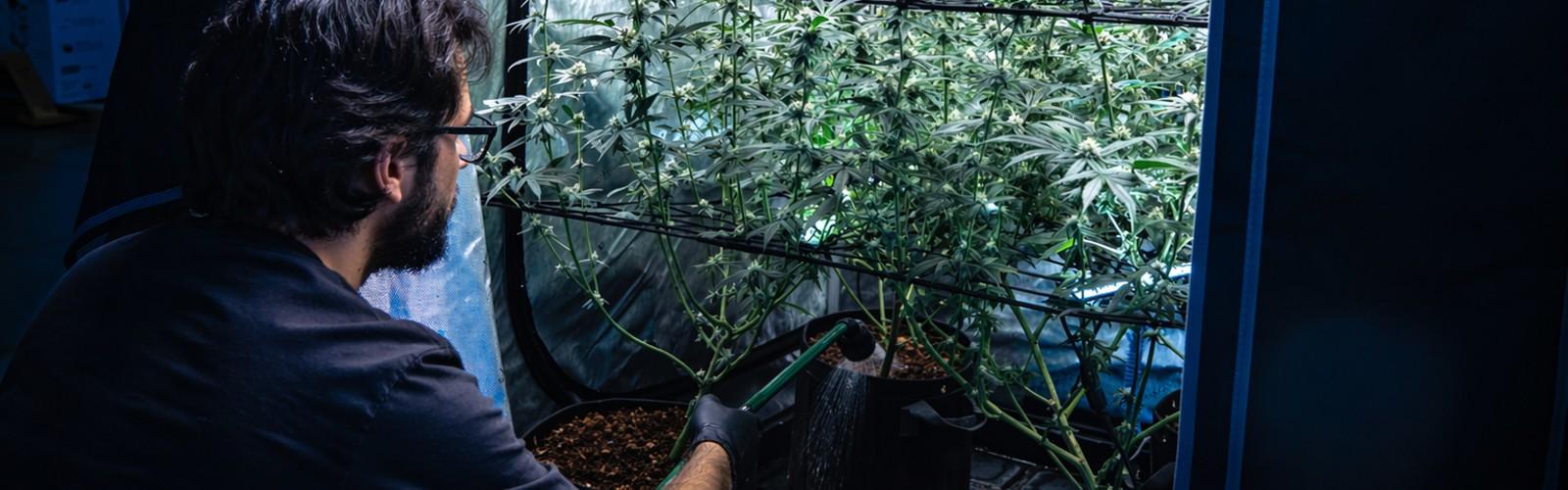
What is a dry back in cannabis cultivation?
The concept of dry back refers to the controlled drop in substrate water content between one irrigation event and the next. Simple in theory. But there's a key word here: controlled. Because a dry back is not about "letting it dry out and that's it." It's about steering substrate moisture within a useful, known, and repeatable range in order to modulate root oxygenation, nutrient uptake, and growth rate.
The metric used to quantify all of this is VWC, short for volumetric water content. This is the parameter measured by dielectric substrate sensors, and it marks the difference between watering by intuition and watering based on data.
It's important to highlight a key distinction: applying the dry back technique does NOT mean subjecting the plant to severe water stress. Scientific literature on cannabis is quite clear on this point: water deficit, especially during flowering, reduces floral biomass and can alter the final cannabinoid profile.
A poorly understood dry back does NOT increase yield-in fact, it can reduce it. That's why it's essential to understand how to apply it correctly.
What happens in cannabis roots when the substrate stays constantly saturated
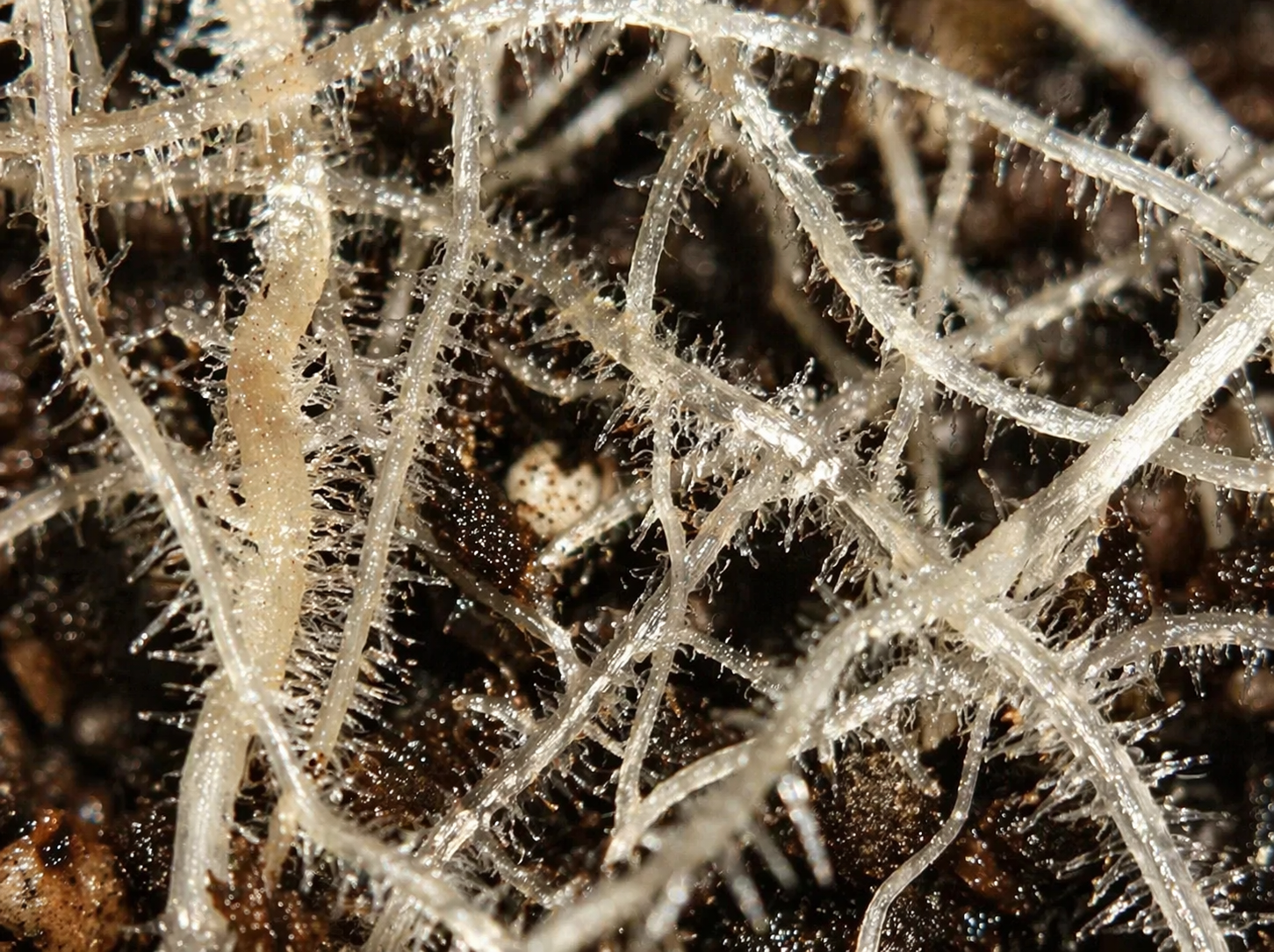
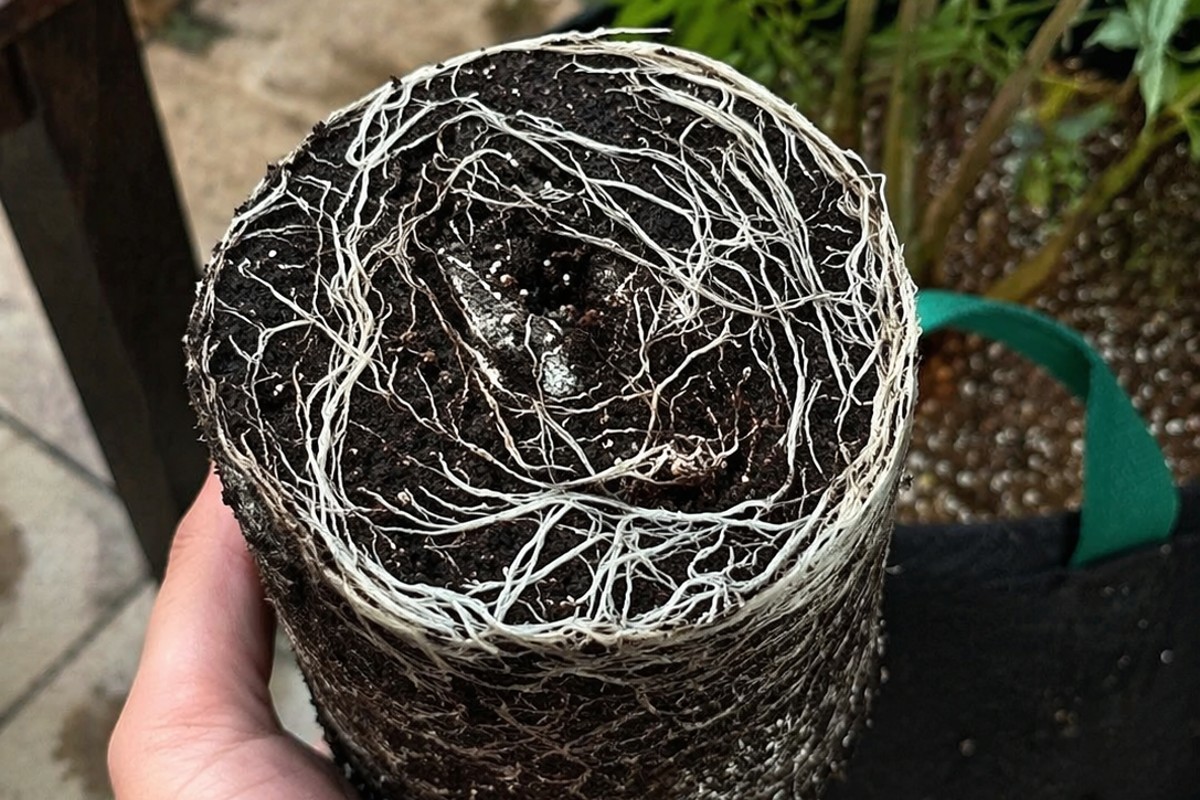
Coco substrate has become popular in cannabis cultivation precisely because it promotes root oxygenation. When the substrate is well aerated, roots can breathe better, absorb water and nutrients more efficiently, and the crop becomes less vulnerable to pathogens that thrive in constantly wet environments.
The problem arises when the medium remains saturated for too long. Water-filled pores displace air, root respiration becomes limited, and the rhizosphere turns into an environment where pathogens feel at home and proliferate.
In this context, a moderate dry back is the tool that prevents the substrate from staying in that constantly saturated state. But the counterbalance is just as important: available water supports cell expansion, transpiration, and nutrient transport. When the substrate dries out too much, the plant slows down-it doesn't grow faster because it's stressed; it grows worse.
The art of proper irrigation lies in achieving that balance between dry and wet, without reaching the extremes of either.
The grow environment matters as much as irrigation
Environmental conditions directly influence how much water the roots absorb: the higher the temperature, the more water the plant will consume and the higher the transpiration rate. If relative humidity is too high-outside the optimal VPD range-transpiration slows down, growth is reduced, and yields decline.
In other words: if you change light intensity, temperature, or relative humidity without adjusting irrigation, you're changing the entire equation.
Don't water your cannabis plants based on timers
Timers help establish consistent irrigation, but they don't measure the real needs of your plants. On their own, timer-based irrigation systems can be useful for saving time or stepping away from your grow for short periods. But if your goal is to optimize yield, you'll need to go further.
A high-yield harvest of premium buds comes from understanding the difference between watering on a schedule and watering based on what's actually happening in the substrate.
That's why, if you're going to automate irrigation and apply the dry back technique, timers alone won't be enough. What truly enables precision is a sensor-based system that triggers irrigation when VWC crosses a defined threshold-not when the clock says it's time.
With this type of system, you can define a high point after irrigation-the moisture ceiling-and a low point before the next irrigation-the substrate dryness floor. This framework allows you to repeat similar cycles day after day with a level of consistency that's impossible to achieve by watering "by eye."
The hidden risk: EC rises as the substrate dries
As substrate water content decreases, the relative concentration of salts in the rhizosphere increases-and that has consequences. An overly aggressive dry back may appear to be working-the plant is pushing, roots look active-until symptoms suddenly show up: burnt tips, dark or rigid leaves, nutrient lockout, imbalances between calcium, magnesium, and potassium…
That's why it's important to point out that a moisture sensor only gives you half the picture (substrate water content). More advanced controllers integrate both VWC and EC readings, precisely because a single metric isn't enough to understand what's really happening in the root zone.
Dry back depending on the stage of cannabis cultivation
Cannabis plants don't require the same level of dry back at every stage of their lifecycle:
- Rooting and early transplants: drying should be very gentle. Young roots need oxygen, yes-but also consistent water availability. This is not the time to experiment.
- Vegetative stage: this is where a moderate dry back fits best. Build root momentum, avoid constantly saturated substrate, encourage root exploration. Mild water stress at this stage is far less costly in terms of final yield than the same stress applied later.
- Flowering: less experimentation, more precision. This is the stage where water deficit most directly impacts floral biomass and harvest index. It's not the time to push dry backs aggressively-it's the time to fine-tune them.
- Final ripening: many growers adjust irrigation conservatively, but it's important to distinguish between sensible water management and severe stress. They're not the same.
There is no universal dry back
Coco, peat-perlite mixes, and rockwool… they don't dry at the same rate. A 5-liter pot doesn't behave like a 15-liter one. An air-pot or a fabric pot with high lateral airflow dries faster than a standard rigid container. Copying drying percentages from another grower using a different substrate, container, and environment is a risky move.
That's why, before applying dry back, you need to measure: track how moisture rises and falls in your grow under normal conditions, then define a working range-not a single "magic" number-and adjust based on what you observe in the plant: vigor, turgor, drying rate, environmental demand. Sensors are the tool, but interpretation and observation of plant signals remain your responsibility.
The pro level isn't about drying more-it's about drying better
Properly understood, dry back isn't a stress technique-it's a way to keep the plant for longer periods each day in the zone where roots can breathe, nutrient uptake is efficient, and growth isn't restricted. It's not about forcing through stress-it's about controlling for optimization.
When you combine substrate sensors, VWC monitoring, EC control, and an understanding of plant stages, you stop watering on autopilot and start irrigating to support the plant's metabolic processes exactly when it needs it. That's the difference between a decent grow and a truly optimized one-and you'll see it clearly at harvest.
Comments from our readers
There are no comments yet. Would you like to be the first?
Leave a comment!Did you like this post?
Your opinion about our seeds is very important to us and can help other users a lot (your email address won't be made public).