

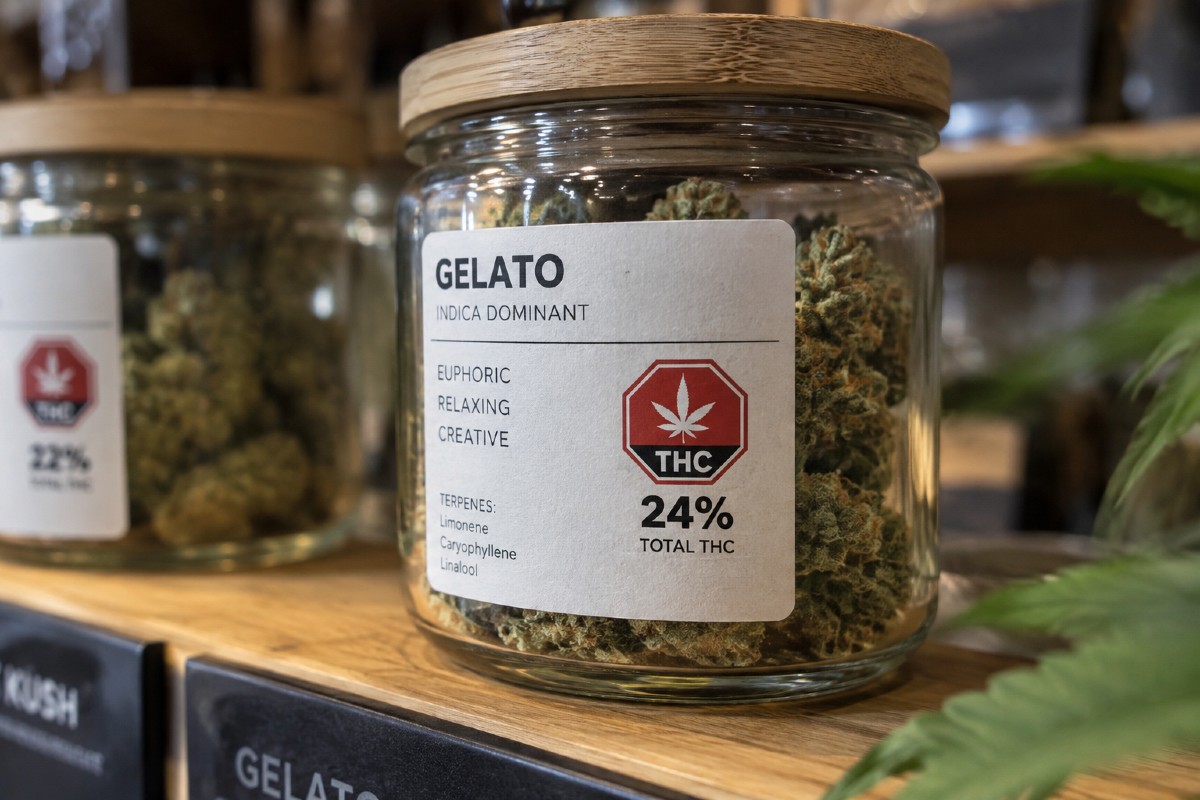
- Two cannabis flowers sit side by side in a dispensary. One is labelled 18% THC and the other 28%. If that were the only information available, many consumers would probably assume that the second flower would produce a much stronger effect.
- The logic seems straightforward: if THC is the main compound responsible for cannabis's psychoactive effects, the higher its percentage, the stronger the high should be.
- However, science adds some important nuance, because the THC percentage of a flower is not a direct measure of how high it will make you. In this article, we take a closer look at what is really going on.

There is no doubt that THC dose matters-a lot. However, several studies also show that there are many factors between the number printed on a label and the experience a person ultimately has, making it far from a simple equation we can reliably use. How much cannabis someone consumes, how they consume it, how much THC their body actually absorbs, their tolerance, and even the relationship between dose and effect can all influence the outcome.
But to understand the complex mechanisms behind the psychoactive effects of cannabis, we first need to separate two concepts that are often treated as if they were the same thing.
Potency Is Not the Same as Dose
When a cannabis flower contains 20% THC, that percentage tells us about its concentration, or chemical potency; it does not directly tell us how much THC a person will actually consume. Think of two alcoholic beverages: knowing that one contains 5% alcohol and another 40% tells us their concentration, but it is not enough to know how much alcohol someone will ultimately consume-one glass, two, or the entire bottle. Something similar happens with cannabis. A flower with a higher THC percentage potentially contains more THC per gram of plant material than one with a lower percentage. But the user's final exposure to the psychoactive cannabinoid-in this case THC-will also depend on how much is used and how it is consumed.
This distinction is so important in research that the US National Institutes of Health established a standard THC unit of 5 mg to make it easier to compare results across different studies. The reasoning is simple: when studying the effects of cannabis, knowing the amount of THC administered is far more informative than simply stating that a flower with a certain THC percentage was used. And this brings us to the first piece of the puzzle:
THC percentage ≠ THC dose ≠ absorbed dose ≠ intensity of effects
These variables are related, but they are not interchangeable.
So... Does More THC Produce Stronger Psychoactive Effects?
Yes, up to a point. THC is the main compound responsible for the intoxicating effects of cannabis, and controlled experiments show a relationship between the amount administered and the intensity of many of its effects. In studies involving people who use cannabis infrequently, for example, higher doses of inhaled THC have produced stronger subjective effects as well as greater cognitive and psychomotor impairment.
However, the latest evidence adds a particularly interesting nuance. A systematic review and meta-analysis published in 2026 brought together 41 experimental studies involving 1,020 participants who used cannabis infrequently. When the results were analysed collectively, researchers found that increasing the dose of inhaled THC increased participants' subjective feeling of being high. So far, exactly what we would expect. However, the relationship between dose and subjective intoxication did not appear to increase indefinitely in a straight line. The authors identified a non-linear response consistent with a ceiling effect: as the dose increases, the effects may continue to increase, but each additional increase in dose does not necessarily produce a proportional increase in how high someone feels.
In other words, going from a low dose of THC to a higher one can significantly change the experience, but that does not mean doubling the THC will double the high.
The Flower vs. Concentrate Experiment
One of the studies that best illustrates this paradox stepped outside the laboratory to examine what happens with products available on the real-world market. Researchers at the University of Colorado studied consumers who used cannabis flower containing approximately 16–24% THC or concentrates containing an impressive 70–90% THC.
If THC percentage directly determined the intensity of the effects, we would expect enormous differences. And chemically, there was indeed a major difference: participants who used concentrates reached considerably higher plasma THC concentrations. However, these huge differences in THC exposure did not translate into equivalent differences in the subjective and neurobehavioral measures examined.
The researchers observed impairment after consumption, including effects on verbal memory and balance, but the intensity of these changes did not simply track the potency of the product consumed. This does not mean potency is irrelevant; concentrates resulted in much greater THC exposure, and high-potency products may carry other risks. What it does show is something more interesting: the relationship between the amount of THC a product contains and the effects experienced by a person does not work like the volume control on a stereo. A product containing 80% THC does not automatically produce four times the effect of one containing 20%.
The Consumer Also Changes the Dose
There is another variable that makes the equation even more complicated: us. When we inhale cannabis, we are not machines that administer exactly the same amount every time. We can change the size of our puffs, how long we inhale, the number of inhalations we take, or simply stop consuming once we reach the desired effect. This phenomenon is known as self-titration.
Some studies have found that consumers partially adjust the way they inhale when using more potent cannabis. In one study involving regular cannabis users, higher THC concentrations were associated with a lower volume of smoke inhaled. However, this compensation was incomplete: overall, those using more potent cannabis were still exposed to greater amounts of THC.
More recent research adds another nuance. When cannabis flower is compared with concentrates, many consumers use smaller amounts of the much more potent product-which is hardly surprising, given the fairly obvious logic behind it. But within the same product category, people with higher tolerance may actually prefer more potent products and consume larger quantities.
Self-titration therefore exists, but it is not a perfect mechanism that turns products of different potencies into the same dose.
Which brings us to the heart of the matter...
THC Tolerance Changes Everything
Now imagine administering exactly the same amount of THC to two people. Will they experience the same intensity of psychoactive effects? Most of us probably already know that the answer is no. Repeated exposure to THC can produce tolerance to some of its effects. A mega-analysis of four controlled trials found that greater frequency of cannabis use was associated with a reduction in some of the subjective and intoxication-like effects produced by THC.
Interestingly, this tolerance does not appear to develop equally across all effects. In fact, researchers found evidence that tolerance differed depending on what was being measured. This helps explain a fairly common experience: an amount of cannabis that may feel overwhelming to someone with little experience can produce much weaker subjective effects in a regular consumer. The potency is in the flower, but the response also depends on the tolerance the individual has developed.
Route of Administration Matters More Than You Might Think
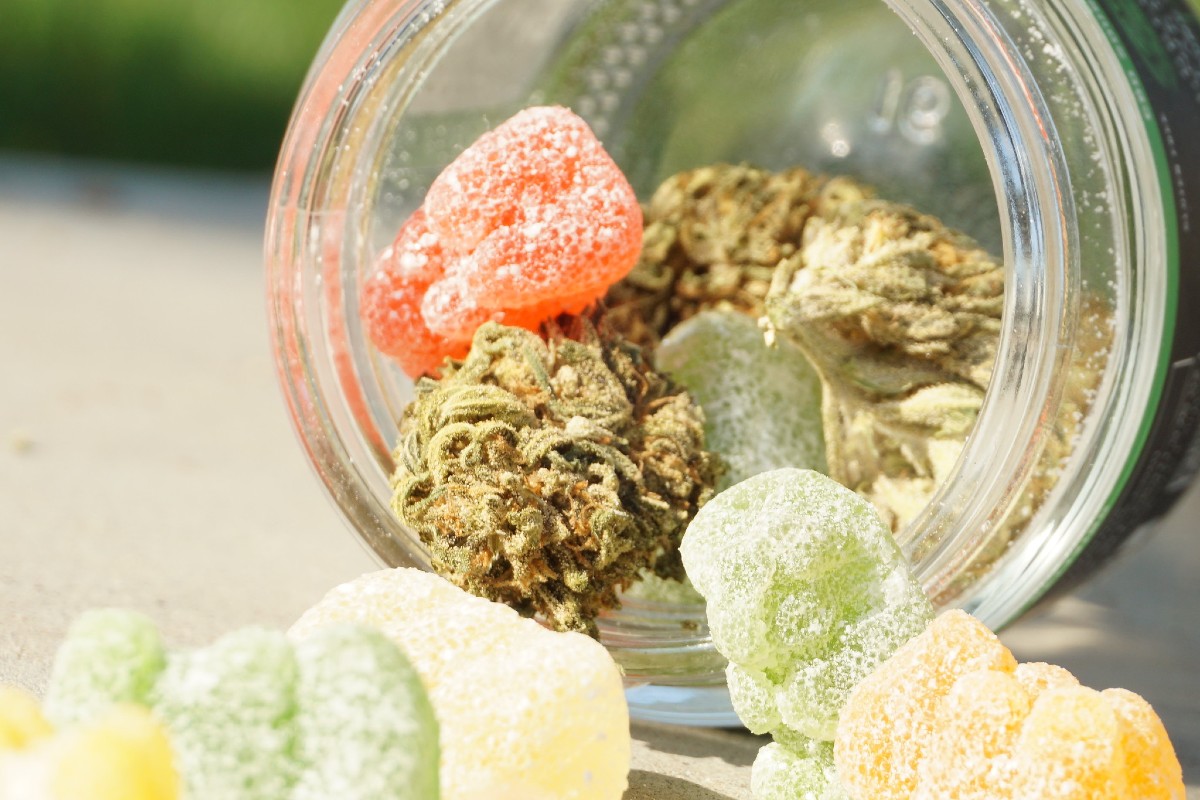
In a controlled trial involving adults who used cannabis infrequently, 10 mg and 25 mg doses of THC produced different effects depending on whether the cannabis was smoked or vaporized. At the same dose, vaporized cannabis generally produced stronger effects and higher peak THC concentrations in the blood than smoked cannabis. When THC is consumed through edibles, the difference becomes even more apparent. Ingested THC passes through the digestive system and then the liver, where some of it is converted into 11-hydroxy-THC (11-OH-THC), a psychoactive metabolite. The onset of effects is also much slower. In controlled studies of oral cannabis, effects can begin between 30 and 60 minutes after ingestion and reach their peak considerably later than when cannabis is inhaled.
This is why simply comparing the THC percentage of flower, a vaporizer product and an edible makes little pharmacological sense. The figure may tell us how much THC a product contains, but on its own it does not describe the journey that THC will take through the body.
Is Blood THC a Reliable Measure?
We might think there is a simple solution: forget the label and measure how much THC is actually present in the blood. The problem is that this still does not give us a reliable "high meter." A review analysing hundreds of findings related to driving and performance found that THC concentrations in blood and oral fluid were relatively poor indicators of the degree of impairment caused by cannabis.
In another experiment, blood THC concentrations after inhaling cannabis fell back toward baseline levels while some pharmacological effects and impairments were still present. This happens because pharmacokinetics and pharmacodynamics are two different things: one describes what the body does to a substance, while the other describes what that substance does to the body. This is why a blood THC level cannot reliably determine how high a person is.
Can We Trust the THC Percentage on the Label?
There is one final reason not to turn THC percentage into an absolute score for quality or intensity: the measurement itself comes with a degree of uncertainty. A study published in 2025 purchased 277 commercial cannabis products from 52 dispensaries in Colorado and independently retested their THC content.
Among the flower products analysed, only 56.7% fell within ±15% of the THC level stated on the label. Overall, measured THC levels tended to be lower than those declared. Results from one specific market cannot automatically be extrapolated to every country or regulatory system. But they serve as an important reminder: a laboratory figure still depends on sampling, analytical methodology and the quality-control procedures used.
From Percentage to System: A Different Way to Think About Potency
Perhaps the fundamental mistake is trying to reduce a complex pharmacological experience to a single number. THC percentage answers one question: How concentrated is the THC in this product? But consumers are usually trying to answer another: What effect will it have on me? To get from one question to the other, we need to follow an entire chain:
product concentration → amount consumed → THC administered → amount absorbed → metabolism → individual tolerance → pharmacological response → subjective experience.
THC percentage sits at the beginning of that chain, not at the end. This explains something that may initially seem contradictory: two flowers with different THC percentages can produce experiences of similar intensity; the same flower can affect two consumers very differently; and a higher dose can produce stronger effects without that increase being proportional.
None of this makes THC irrelevant. Quite the opposite: THC remains the main known driver of cannabis intoxication, and dose clearly matters. What the science challenges is a different oversimplification: higher THC percentage = proportionally stronger high = better cannabis. These are three different claims, and none automatically follows from the one before it. Perhaps that is why the more interesting question for the future of cannabis is not simply how much THC we can get a plant to produce, but how much we understand about the experience behind that number.
Frequently Asked Questions
Does More THC Mean a Stronger High?
A higher dose of THC generally increases its effects, but not proportionally. Cannabis containing 30% THC will not necessarily make someone twice as high as cannabis containing 15% THC.
What Determines the Intensity of a Cannabis High?
The actual dose consumed, route of administration, THC absorption and metabolism, and individual tolerance all influence the intensity of the effects.
Do Terpenes Affect the Cannabis High?
This remains an active area of research, but there is currently insufficient clinical evidence to reliably predict the effects of cannabis based on its terpene profile.
Scientific References
- Goodwin, I. et al. (2026). The subjective effects of Δ9-tetrahydrocannabinol: A systematic review and dose-response meta-regression. Neuroscience & Biobehavioral Reviews, 188, 106795. DOI: 10.1016/j.neubiorev.2026.106795.
- Bidwell, L. C. et al. (2020). Association of Naturalistic Administration of Cannabis Flower and Concentrates With Intoxication and Impairment. JAMA Psychiatry, 77(8), 787–796. DOI: 10.1001/jamapsychiatry.2020.0927.
- Spindle, T. R. et al. (2018). Acute Effects of Smoked and Vaporized Cannabis in Healthy Adults Who Infrequently Use Cannabis: A Crossover Trial. JAMA Network Open, 1(7), e184841. DOI: 10.1001/jamanetworkopen.2018.4841.
- Freeman, A. M. et al. (2021). Does variation in trait schizotypy and frequency of cannabis use influence the acute subjective, cognitive and psychotomimetic effects of delta-9-tetrahydrocannabinol? A mega-analysis. Journal of Psychopharmacology, 35(7), 804–813. DOI: 10.1177/0269881120959601.
- Cuttler, C., LaFrance, E. M. & Stueber, A. (2021). Acute effects of high-potency cannabis flower and cannabis concentrates on everyday life memory and decision making. Scientific Reports, 11, 13784. DOI: 10.1038/s41598-021-93198-5.
- Newmeyer, M. N. et al. (2017). Pharmacokinetic Profile of Oral Cannabis in Humans: Blood and Oral Fluid Disposition and Relation to Pharmacodynamic Outcomes. Journal of Analytical Toxicology, 41(2), 83–99. DOI: 10.1093/jat/bkx012.
- Englund, A. et al. (2023). Does cannabidiol make cannabis safer? A randomised, double-blind, cross-over trial of cannabis with four different CBD:THC ratios. Neuropsychopharmacology, 48, 869–876. DOI: 10.1038/s41386-022-01478-z.
- Giordano, G. N. et al. (2025). Accuracy of labeled THC potency across flower and concentrate cannabis products. Scientific Reports, 15, 20822. DOI: 10.1038/s41598-025-03854-3.
Comments from our readers
There are no comments yet. Would you like to be the first?
Leave a comment!Did you like this post?
Your opinion about our seeds is very important to us and can help other users a lot (your email address won't be made public).