

- Your irrigation system may look perfectly clean while hiding an entire microscopic ecosystem inside its pipes, where bacteria, fungi, and other microorganisms find damp surfaces on which to settle and grow.
- Over time, these communities can interfere with water flow and nutrient distribution. Known as biofilm, this microbial buildup is a hidden threat to cannabis grows that rely on automated irrigation systems.
What Exactly Is Biofilm?
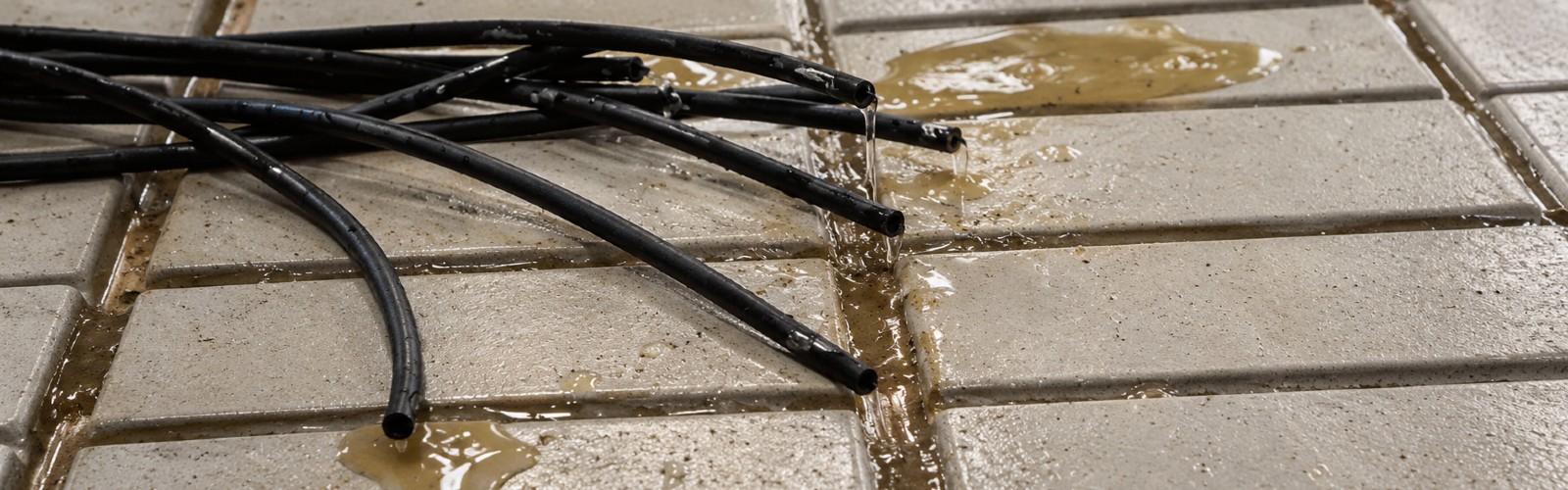
To understand what biofilm is, just think of that slippery coating that forms on river rocks or on the walls of a container that has remained damp for a long time. What looks like a simple layer of dirt is actually a community of microorganisms that have attached themselves to a surface and formed a structure that holds them together.
These communities consist mainly of bacteria, although they can also include fungi, algae, and other organisms. Their defining characteristic is that the microorganisms produce a matrix of extracellular substances, primarily made up of polysaccharides, proteins, and other compounds, which acts as a kind of biological glue.
This matrix provides stability, helps microorganisms adhere to surfaces, and can make it harder for cleaning treatments to reach them. In fact, biofilm doesn't need large amounts of visible dirt to develop. All it takes is a damp surface, microorganisms capable of colonizing it, and suitable conditions for growth. That's why, even if the water in your nutrient reservoir looks perfectly clean, the inside of your irrigation lines may be harboring microbial communities that are invisible to the naked eye.
Why Does Biofilm Develop in Cannabis Irrigation Systems?
The irrigation lines used in cannabis grows provide constantly damp surfaces, while the water flowing through them carries microorganisms and nutrients. In certain sections, water may also become stagnant or circulate more slowly. The presence of organic matter is one of the main factors that can encourage these communities to develop. This is precisely why organic fertilizers, or fertilizers not specifically formulated for hydroponic or drip irrigation systems, are generally discouraged in these setups.
However, other factors also come into play, including temperature, water flow rate, surface characteristics, and the composition of the microbial communities themselves:
- Irrigation system materials: studies investigating this issue have found that the material used to manufacture irrigation pipes can significantly influence both biofilm accumulation and the composition of bacterial communities. Under the conditions examined, PVC pipes accumulated more biofilm than polyethylene pipes. This doesn't mean that polyethylene prevents biofilm formation or that PVC is necessarily unsuitable for irrigation. However, it does suggest that the materials used in an irrigation system can influence how microorganisms colonize its internal surfaces, a factor that often goes unnoticed when assessing irrigation system performance.
- Temperature also plays an important role. In greenhouses, where temperatures can fluctuate considerably throughout the day, irrigation lines may harbor microbial communities that differ from those originally present in the incoming water.
What Problems Can Biofilm Cause in a Cannabis Grow?
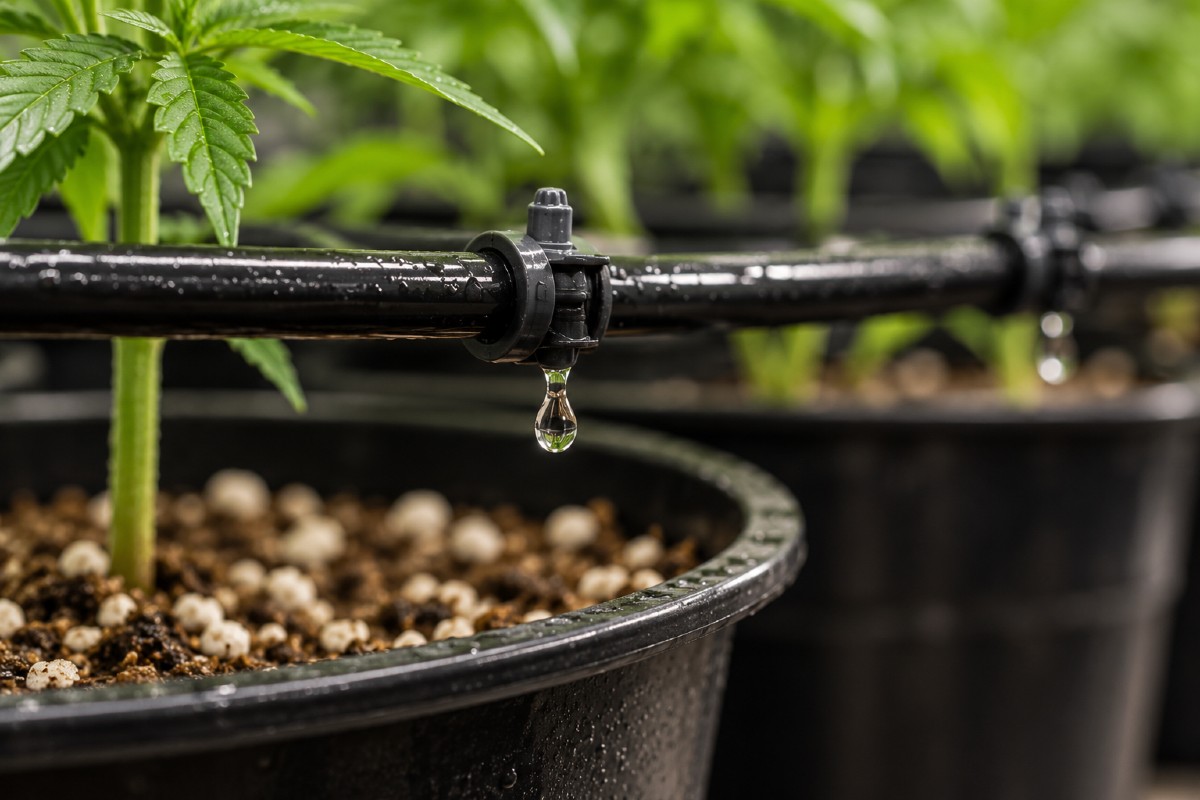
The main problem with biofilm, commonly referred to by growers as "slime buildup", is its ability to interfere with water flow through the irrigation system. As these microbial communities grow, they can accumulate along the inner walls of irrigation lines and inside the narrow openings of drip emitters, gradually restricting the space available for water to pass through.
In a cannabis grow equipped with drip irrigation, where uniform water distribution is essential, even a partial blockage can create significant differences between plants. While some drippers continue delivering their normal flow, others may begin supplying less water and nutrient solution.
Sometimes the problem is difficult to detect because flow rates can change without the drippers becoming completely clogged. An irrigation system may appear to be operating normally while gradually losing its uniformity. This can make it difficult for growers to identify the real source of the problem. A plant receiving less water or fewer nutrients than intended may show symptoms of water stress or nutrient imbalances, even though the underlying cause has nothing to do with the growing medium or the nutrient solution itself, but rather with uneven irrigation.
Biofilms can also provide shelter for different microorganisms, including some that may be pathogenic. Research in horticulture has shown that these communities can make microbial management more challenging in recirculating irrigation systems. However, an important distinction needs to be made: the presence of biofilm does not necessarily mean that a plant has developed a root disease. Many biofilms contain harmless microorganisms, and their composition can vary considerably.
Biofilm, Algae, and Mineral Deposits: Three Different Problems Growers Should Learn to Tell Apart
One of the most common mistakes is assuming that any buildup inside an irrigation system must be caused by algae. Although algae can form part of certain microbial communities, not all biofilms contain algae, and not all deposits found inside irrigation lines are biological in origin.
Algae need light to carry out photosynthesis, which is why they tend to thrive in transparent reservoirs, exposed surfaces, or areas where light can reach the water. Bacterial biofilms, on the other hand, can develop perfectly well inside opaque irrigation lines, where no light penetrates.
Mineral deposits are a different issue altogether. Dissolved salts in the water can accumulate inside irrigation lines and drip emitters. These deposits can restrict water flow and cause blockages similar to those produced by algae or biofilm, but the methods used to remove them are very different. To make matters even more complicated for cannabis growers, both problems can occur at the same time: mineral deposits may become trapped within a microbial matrix, while biofilm-covered surfaces can encourage particles to accumulate.
For this reason, it isn't always possible to identify the cause of a blockage simply by looking at it. Before blaming biofilm for an irrigation problem, it's worth considering other possible causes, such as:
- Insufficient water pressure
- Filtration problems
- Accumulated particles or mineral salts
A reduction in water flow is a sign that something isn't working properly, but it isn't, on its own, proof of microbial contamination.
How to Prevent Biofilm in Cannabis Cultivation
Once a mature biofilm has established itself inside an irrigation system, removing it can be considerably more difficult than eliminating microorganisms suspended freely in the water. The protective matrix, or slime layer, makes cleaning more challenging, and some bacterial communities can recover if the attached residues aren't properly removed. That's why prevention and regular irrigation system maintenance are essential:
- Prevent organic matter from accumulating.
- Check and clean filters regularly.
- Inspect drip emitters and check that water flow remains uniform, so potential problems can be detected before they develop into serious blockages.
- Pay attention to the layout of your irrigation system. Sections where water remains stagnant for long periods, areas that are difficult to clean, and deteriorated surfaces can encourage residue buildup and microbial colonization.
- Keep nutrient reservoirs protected from dirt and unnecessary exposure to light, helping reduce some of the conditions that encourage biological growth.
How to Detect and Remove Biofilm from a Drip Irrigation System
Biofilm doesn't always appear as an obvious layer of slime. Sometimes, the first warning sign is that certain drip emitters begin delivering less water than others, even though they're all connected to the same irrigation system.
That's why, before reaching for any cleaning products, the first thing you need to do is check whether there's actually a blockage and work out what's causing it.
Step 1. Check That Your Drip Emitters Are Working Properly
One simple way to spot irregularities is to place a container beneath several drip emitters and collect the water they deliver over the same period of time. Ideally, compare emitters located at the beginning, middle, and end of your irrigation lines. If some containers collect noticeably less water than others, there's a distribution problem that needs investigating.
This doesn't necessarily mean biofilm is present. As mentioned earlier, blockages and uneven flow can also result from pressure differences, accumulated particles, or mineral deposits.
Step 2. Inspect the Nutrient Reservoir, Filters, and Inside of the Irrigation Lines
With the pump switched off, inspect your nutrient reservoir for slimy residue stuck to the walls, particularly in areas that remain submerged. Check the filters as well, looking for any gelatinous buildup. If your system has removable end caps, you can open an irrigation line and inspect its interior. A slippery surface or a coating of slime may indicate biological buildup. To see what's circulating through the pipes, you can collect the flushing water through a fine mesh screen. Gelatinous residue suggests organic or microbial contamination, while solid particles and hard deposits are more likely to indicate sediment or mineral precipitation. These checks can help you understand what's causing the blockage, although they won't identify the specific microorganisms involved.
Step 3. Drain and Clean All Accessible Components
If you find slimy deposits, the next step is to stop the nutrient supply and drain the affected reservoir. Clean the reservoir walls, lid, and removable components to physically remove any residue stuck to their surfaces. You should also inspect and clean the filters according to the manufacturer's instructions. It's important not to simply add a disinfectant to the water and assume the problem is solved: a mature biofilm contains a protective matrix that can prevent cleaning agents from reaching the microorganisms inside it. Before moving on, make sure that neither the cleaning water nor any dislodged residue can reach the growing medium or the roots.
Step 4. Flush the Irrigation Lines with Clean Water
Once you've removed the accessible deposits, open the ends of the irrigation lines and run clean water through the system to flush out accumulated particles. Start with the main supply lines, then move on to the secondary lines, and finally the branches feeding the drip emitters. Collect and dispose of the discharged water appropriately, making sure the flushed-out residue doesn't end up in your pots. Continue flushing until the water runs clear and no visible debris remains, always staying within the system's maximum operating pressure.
Step 5. Replace Any Drip Emitters That Remain Clogged
After flushing the system, repeat the flow test from Step 1. If certain drip emitters are still delivering less water, you may need to remove them for inspection or replace them altogether. With non-serviceable emitters, trying to clear an internal blockage may be less reliable than fitting a new one. If blockages keep appearing in different parts of the system, replacing the affected drippers won't be enough: you'll also need to investigate why debris is continuing to reach them.
Step 6. Consider a Biofilm-Specific Cleaning Treatment
When biological buildup persists, physical cleaning and flushing may not be enough. There are sanitation treatments designed to control microorganisms and biofilms, including certain oxidizing agents. However, a thorough treatment of this kind should only be carried out once the growing cycle has finished, or if you temporarily switch from automated irrigation to manual watering while the system is being cleaned. Biofilm-removal chemicals must not reach your plants, and you need to make absolutely sure that the irrigation lines, reservoir, and every other treated component have been thoroughly rinsed before reconnecting the system to your grow. The choice of product, its concentration, and the required contact time must follow the manufacturer's label and instructions. Never mix chlorine-based disinfectants with acids, ammonia, or other cleaning products, as this can release dangerous gases.
Step 7. Check the Results and Prevent the Problem from Coming Back
Before restarting your normal irrigation schedule, make sure no cleaning product residues remain, the filters are correctly installed, and all drip emitters are delivering a uniform flow. Then make a few simple checks part of your regular maintenance routine: inspect the reservoir and filters periodically, prevent organic matter from building up, check the ends of the irrigation lines, and flush the system whenever necessary. Clean the system between growing cycles, when the irrigation lines can be disconnected from the plants and a thorough cleaning is easier to carry out. The aim isn't to maintain a permanently sterile irrigation system, which is difficult to achieve in a conventional setup, but to prevent microbial buildup from reaching levels that interfere with water distribution.
Frequently Asked Questions
What Is Biofilm in an Irrigation System?
Biofilm is a community of microorganisms attached to a surface and protected by a matrix of substances they produce themselves. It can develop inside irrigation lines, reservoirs, and drip emitters, where its accumulation can restrict water flow and contribute to clogging.
Can Biofilm Cause Root Diseases in Cannabis Plants?
Not necessarily. Some biofilms can harbor potentially pathogenic microorganisms, but their presence doesn't automatically mean a plant has developed a root disease. The main risk in irrigation systems is that biofilm can disrupt water flow and cause uneven distribution of water and nutrients.
Can Biofilm Develop Even When the Water Looks Clean?
Yes. Microorganisms can attach themselves to the inner surfaces of irrigation lines even when the water looks perfectly clear. Biofilm formation depends on several factors, including the materials used in the system, temperature, nutrient availability, and water flow conditions.
Scientific and Technical References
- Cabrera-García, J. and Raudales, R. E. (2026). Pipe material governs biofilm development and microbial communities more than organic suspended solids in drip irrigation systems in greenhouse settings. Water Research. DOI: 10.1016/j.watres.2026.125882.
- Wageningen University & Research (2021). Treatment of biofilm formation in irrigation lines in zero liquid discharge cultivation systems.
- Universitat Autònoma de Barcelona (2014). Research on microbial communities in greenhouse drip irrigation systems. University of California Agriculture and Natural Resources. Biological Clogging: Slimes, Algae, etc. Technical guide to microirrigation system maintenance.
Comments from our readers
There are no comments yet. Would you like to be the first?
Leave a comment!Did you like this post?
Your opinion about our seeds is very important to us and can help other users a lot (your email address won't be made public).