

- In this article, we explain the various reasons that can cause the curling of your cannabis leaves.
- Identifying the causes early and addressing them quickly is key to preventing this issue from escalating and affecting both the quantity and quality of your buds.
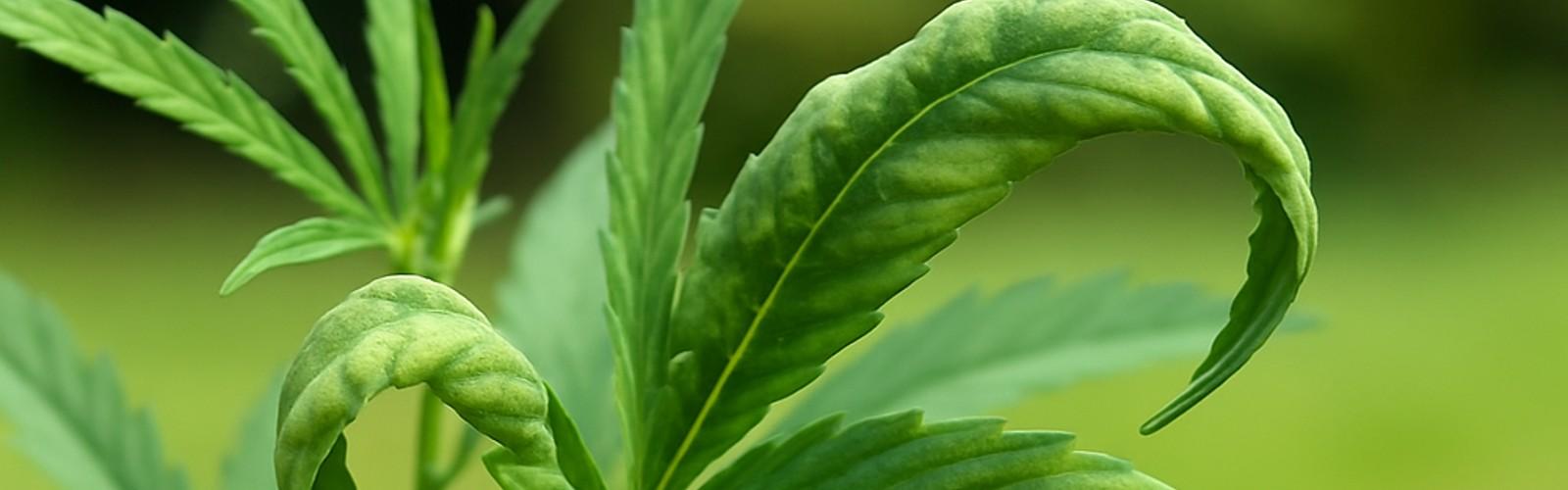
When Cannabis Leaves Speak, It's Worth Listening
In the thrilling journey of cannabis self-cultivation, there's a moment that every grower dreads, which is the appearance of a troubling symptom: the fan leaves that once looked wide open and relaxed begin to curl on themselves, as if trying to hide from the world.
This isn't just a cosmetic issue - curled leaves are a warning sign that something is off.
Why Do Cannabis Leaves Curl?
Cannabis leaves often deform as a defence mechanism against stress. Something in the environment has crossed the line of what's tolerable, and the plant reacts by adjusting its foliage in an attempt to cope with the threat.
Cannabis Leaves Curling Upwards: An Active Defence
When the edges of the leaves curl upwards, it's usually a sign of heat stress. This happens when the plant is exposed to intense light along with excessively low humidity. By curling up, the plant reduces the surface area exposed to the environment, minimising water loss. This commonly occurs when the grow temperatures - either indoors or outdoors - stay above 30°C (86°F) for prolonged periods.
How to Fix This
- Improve ventilation
- Indoor grows: Raise the lights away from the canopy and schedule light cycles during the cooler hours of the day.
- Outdoor grows: Protect your plants from high temperatures during peak hours using shading meshes or awnings.
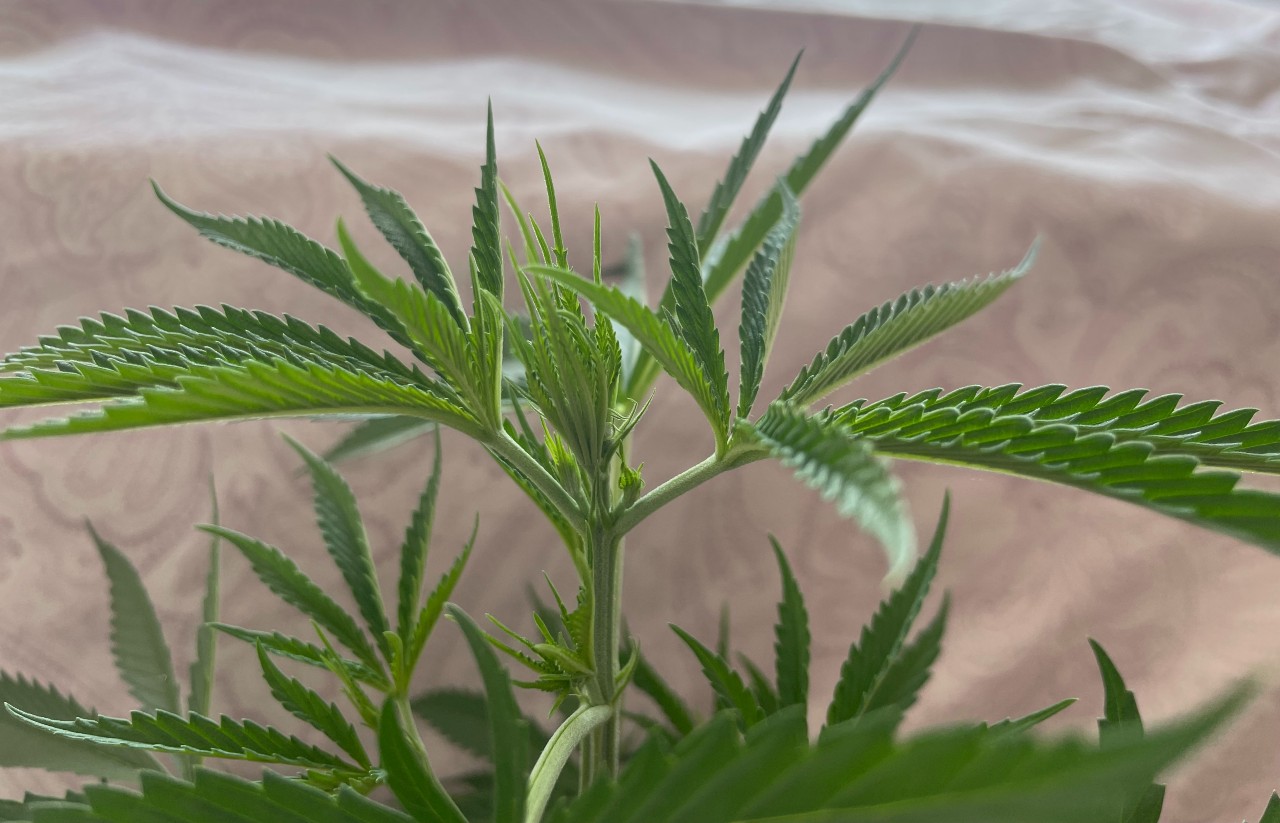
Cannabis Leaves Curling Downwards: Internal Overload
When the leaves curve downwards in what is commonly known as a "claw" shape, the most likely causes are:
- Excess nitrogen
- Overwatering
- A collapsed root system due to salt buildup in the substrate
- Root rot (often triggered by poor drainage or incorrect watering practices)
Irregular or Unusual Leaf Curling
If you're struggling to define the type of curling that is occurring (for instance, leaves curling like a scroll or twisting in strange, asymmetrical ways), this could indicate a more complex issue. These cases often require closer analysis, as they may stem from diseases, nutrient deficiencies, or pest infestations.
When Temperatures Drop Too Low
Cold can also cause leaf curling - typically downwards - , which is often accompanied by a general loss of leaf firmness and vitality. Temperatures below 15°C (59°F) slow down the plant's metabolic activity, making nutrient uptake more difficult and increasing susceptibility to pathogens.
How to Fix This
- Indoor grows: Raise nighttime temperatures when the lights are off, and schedule dark cycles during the warmest part of the day.
- Outdoor grows: Create a simple greenhouse structure to cover your grow at night to retain warmth.
Humidity Imbalance
Cannabis needs specific humidity levels that vary according to the stage of growth. Both excess and lack of moisture can lead to curling leaves. Use a reliable thermohygrometer to monitor the relative humidity of your grow, and adjust it according to the growing phase:
- Seedlings: 65–70%
- Vegetative stage: 50–60%
- Flowering: 40–50%
Leaves Curling Due to Overwatering
Overwatering is one of the most common mistakes in cannabis cultivation. When the substrate stays constantly soaked, the roots suffocate from lack of oxygen. This leads to droopy, limp leaves with downward-pointing tips.
- Symptoms: Dark, soft leaves; weak stems; musty smell in the soil.
Solution: Let the substrate dry thoroughly before watering again. Use pots with good drainage and check the weight of the pot as a watering indicator - only water when the pot feels noticeably light.
Cannabis Leaves Curling Due to Underwatering
Leaves become thin, dry, and brittle; and they curl as the plant tries to retain the little remaining moisture.
Solution: Deep watering, until the water drains from the bottom of the pot, but only when the substrate actually needs it. Avoid daily shallow watering.
Nutrient Excess or Deficiency
Leaf curling can sometimes signal a nutritional imbalance in your plant's diet.
Excess Nitrogen
This is particularly common in the vegetative stage and causes the infamous "eagle claw" effect: thick, dark green leaves that curl downwards at the tips.
Solution: Lower your fertiliser dosage and flush the substrate if nutrient buildup is suspected.
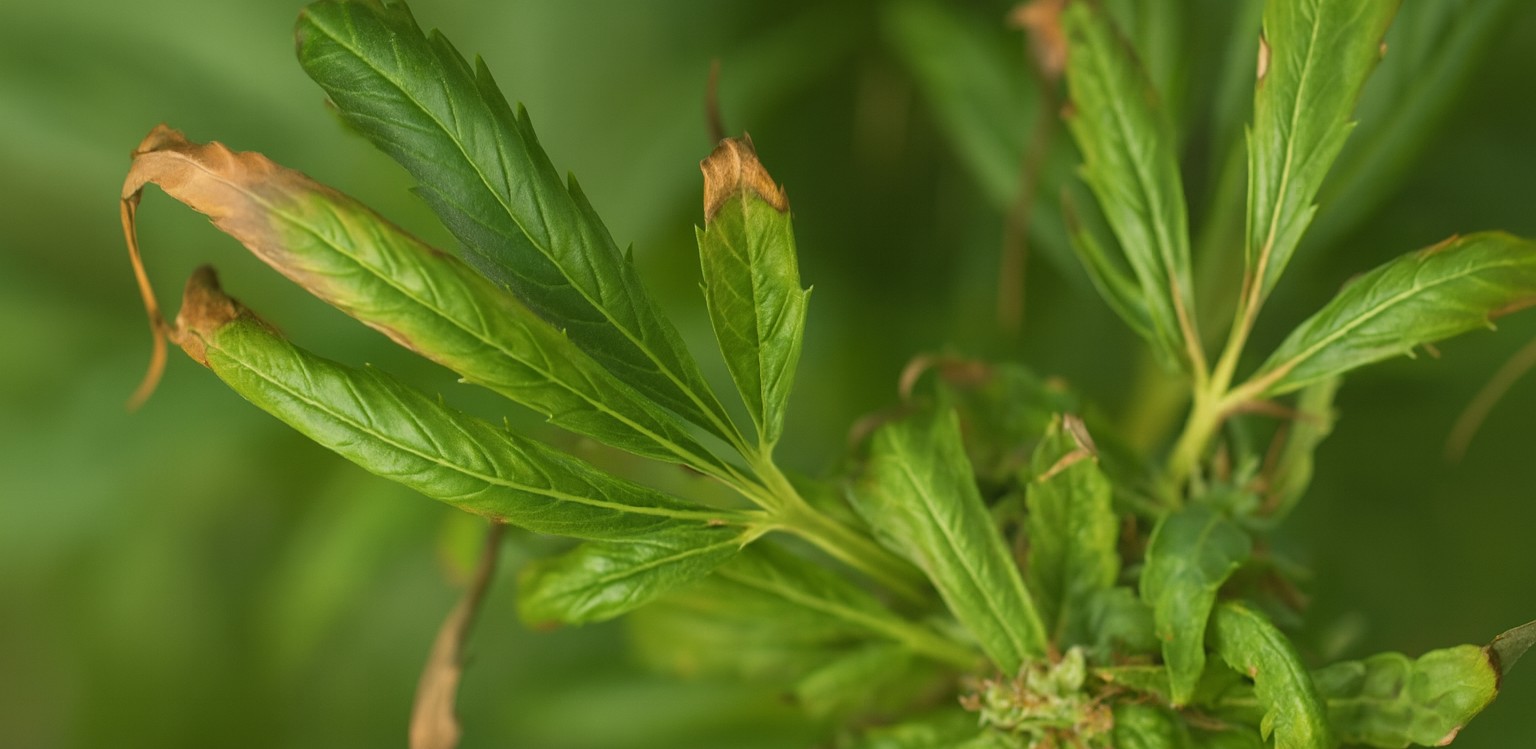
Calcium and Potassium Deficiencies
These often show up as deformed or curled leaves, or as spots between the leaf veins. Solution: Make sure the pH of your irrigation water is within the optimal range (6.0 – 6.5 for soil) to facilitate nutrient uptake.
Often, the issue isn't that you're feeding your plant with the wrong nutrients, but rather that the plant can't absorb them. If salt buildup is suspected, flush the roots and follow up with a targeted supplement which includes the missing nutrient.
Pests and Diseases Leaf-Deforming
- Spider mites: Irregular deformities and yellow speckles
- Thrips: Superficial scraping and twisted leaves
- Aphids: Sap suckers that cause downward curling
Solution: Frequent inspections, sticky traps, potassium soap, and - if needed - introducing beneficial insects like ladybirds or predatory mites.
How to Prevent Leaf Curling
While curling itself isn't the problem, it is a red flag - a symptom that tells you something needs to be corrected. That said, prevention is definitely a grower's best ally:
- Monitor temperature and humidity daily.
- Don't water on a schedule - water only when the substrate calls for it.
- Use reliable tools to measure pH, EC, and climate.
- Feed thoughtfully - neither too much nor too little.
- Inspect the underside of the leaves as if you were searching for clues at a crime scene.
- Keep your grow space clean. Yes, even under the tables!
A curled leaf isn't a failure - it's a message. It's your plant's way of asking you to observe, adjust, and improve the conditions you're providing. Growing cannabis isn't just about following feeding charts or routines. It's about learning to read a language that doesn't have any words. And often, just looking a little closer is all it takes to understand what your plant truly needs.
Comments from our readers
There are no comments yet. Would you like to be the first?
Leave a comment!Did you like this post?
Your opinion about our seeds is very important to us and can help other users a lot (your email address won't be made public).