

- In cannabis cultivation, almost everything happens underground: we talk about roots, well-aerated substrates, microbial life… And yet, we sometimes forget that the plant also breathes, drinks, and communicates through its leaves.
- Foliar feeding is neither a shortcut nor a substitute for irrigation, but it is a precise tool that, when used correctly, can correct mistakes, deficiencies, and restore a plant’s vigor within hours. Used incorrectly, however, it can become an additional problem.

Beyond photosynthesis: leaves can also absorb
Cannabis leaves are covered by a thin waxy layer (the cuticle) and dotted with stomata-small "valves" that regulate gas exchange. Under suitable conditions, these structures allow certain nutrients dissolved in water to enter directly into the plant tissues.
Through these mechanisms, marijuana leaves become a pathway to nourish the plant when specific circumstances require it. This absorption is fast because:
- It does not depend on the condition of the roots or the soil
- It bypasses possible blockages in the root system
- It does not require long mineralization processes, making nutrient uptake much faster. That's why foliar feeding is especially useful when something isn't right and there's no time to wait for the problem to be corrected from below.
Foliar feeding vs. irrigation in cannabis cultivation
The fact that foliar feeding offers advantages should not be confused with it being a (total or partial) replacement for irrigation. Cannabis is designed to absorb most of its nutrients through the roots, which not only take up water and mineral salts but also regulate their availability, store reserves, and maintain an internal balance that allows the plant to grow and develop.
Fertilization through irrigation is therefore the structural backbone of cultivation: it feeds the plant consistently and allows all physiological processes to remain balanced over time. Foliar feeding, on the other hand, works differently. When we spray the leaves, we are not "feeding" the plant in the full sense of the word, but rather intervening at specific points in its metabolism.
Leaves absorb small amounts of nutrients (mainly micronutrients and some macronutrients in very limited doses) and quickly incorporate them where they are needed.
- That's why foliar sprays are so useful for:
- Correcting visible deficiencies before they worsen
- Giving the plant an extra "boost" during times of stress to promote faster recovery
- Preventing imbalances at specific stages

When it makes sense to use a foliar spray (and when it doesn't)
The vegetative phase is undoubtedly the most suitable stage for using foliar sprays. During this period, the plant is in full growth, with young, active, and highly receptive leaves. In addition, the leaf surface is extensive and the metabolism is running at full capacity, which facilitates rapid and efficient absorption of the sprayed nutrients.
Moreover, during vegetative growth cannabis plants tolerate small nutritional corrections better, allowing foliar sprays to be used to stimulate development, intensify green coloration, and improve the plant's response to common stress situations such as transplants, pruning, or sudden changes in temperature and humidity.
That said, they should be used in moderation and with the right products to avoid compromising the balance of your cannabis crop.
Foliar feeding in cannabis cultivation to correct specific deficiencies
When facing deficiencies of magnesium, iron, calcium, or micronutrients-often clearly visible on the leaves-it's best not to wait. Even after adjusting pH or correcting fertilization, the plant's response via root feeding may take several days to become visible.
In these cases, foliar feeding acts as an emergency solution: by applying the nutrient directly to the leaf, you can halt the progression of the deficiency, keep the leaves functional and active, and buy time while the underlying issue is addressed.
It's important to keep in mind that foliar sprays do not resolve the cause of the imbalance; they only mitigate its most immediate effects. That's why they should always be accompanied by a review of irrigation practices, pH, EC, and the overall condition of the substrate-otherwise, the problem will reappear.
Foliar spraying on clones and young seedlings
During the earliest stages of your plants' life, foliar feeding can serve as a temporary aid if used with extreme care. Spraying very diluted solutions onto seedling leaves helps maintain leaf turgor, reduce water stress, and provide small amounts of micronutrients without overloading still-fragile roots.
In this context, restraint is key: minimal doses, a fine mist, and good ventilation afterward are essential to avoid excess moisture or overfertilization.
Remember: in the early stages of the cannabis life cycle, less is more.
Spraying during flowering: only with great caution
During the first weeks of flowering, foliar sprays may still have a place, but only if applied with great care and exclusively to the leaves-never to the flowers.
The situations in which this tool should be used must be well justified: clear and severe deficiencies or extreme situations in which the substrate is waterlogged and needs to dry out to prevent root lockout.
As flowering progresses, however, the margin for error decreases drastically. Buds become denser, and retained moisture can turn into the perfect breeding ground for fungi, in addition to leaving residues that affect the final aroma and flavor. For this reason, foliar feeding is no longer recommended in advanced flowering, and it's best to focus exclusively on well-adjusted irrigation.
The time of day changes everything
Spraying properly isn't just about choosing the right products and doses-it's also about timing. In indoor grows, for example, it's important to spray when the lights are off or just before they turn off. Ensuring good ventilation is also essential to avoid encouraging unwanted pathogens.
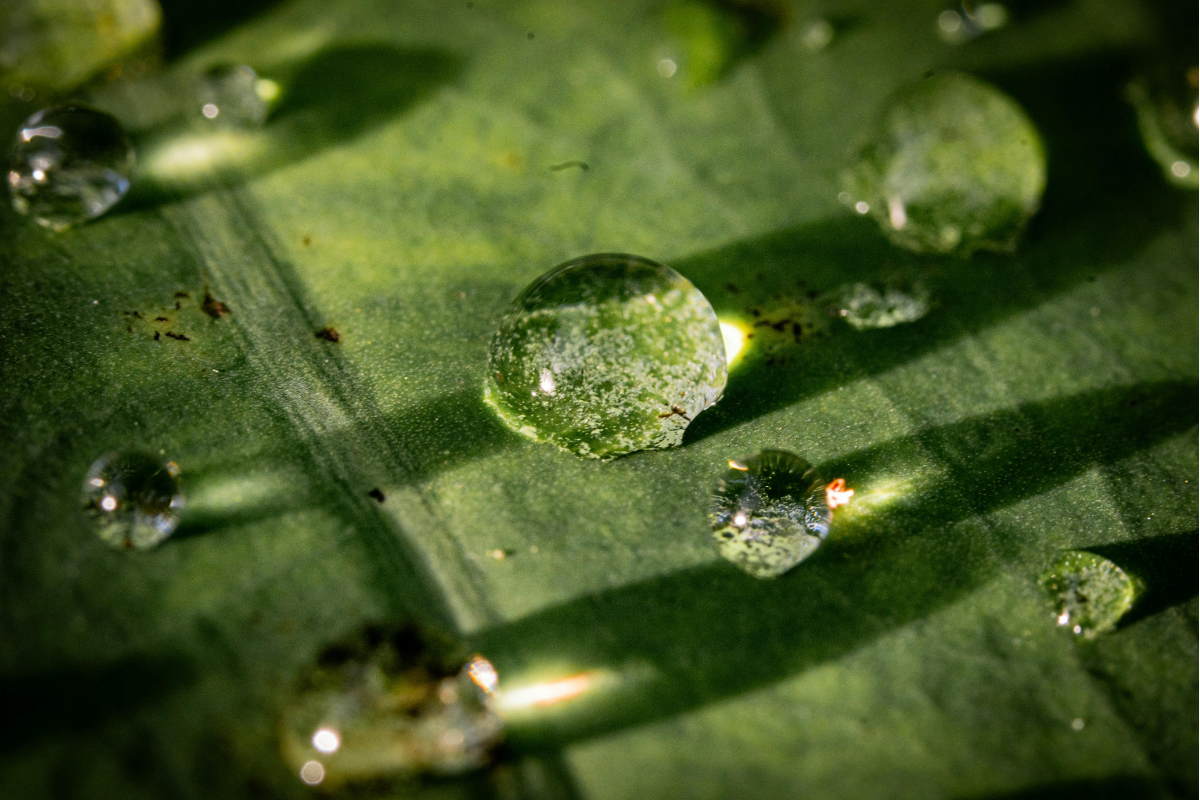
In outdoor cannabis cultivation, it's best to use foliar sprays early in the morning or at dusk, when sunlight is less intense and there's less risk of leaf burn caused by the "magnifying glass" effect of water droplets.
What types of fertilizers can be applied foliar-wise?
Not all fertilizers are designed for foliar application. In fact, one of the most common mistakes among beginner growers is spraying products formulated exclusively for irrigation, without considering that leaves have limited absorption capacity and are far more sensitive than roots. Products designed for foliar sprays work in small amounts and have an immediate effect. Among them, chelated micronutrients stand out, as they are easily absorbed and particularly effective at correcting deficiencies of iron, zinc, manganese, or boron.
You can also use calcium and magnesium, always in low and well-diluted doses, as they help strengthen tissues and maintain metabolic activity without saturating the leaf surface. Seaweed extracts and amino acids also play an important role in foliar nutrition. Rather than directly feeding the plant, they act as biostimulants: improving stress response, aiding recovery after critical moments, and optimizing internal processes such as photosynthesis and nutrient assimilation.
On the other hand, there are fertilizers that should be completely avoided in foliar spraying, such as highly concentrated or salt-rich products, as they can cause leaf burn and unnecessary stress.
It's also not advisable to apply products high in phosphorus or potassium during flowering, as they not only have limited foliar absorption but can also leave unwanted residues (clouding the flavor and aroma of the buds) and encourage pathogen development.
Another common mistake is improvising product mixes without knowing their compatibility or performing prior tests. Before applying any foliar spray to your cannabis crop, the most sensible approach is to test it on a single plant-or even a single branch-and observe how the plant reacts.
The spray's pH: the detail many forget
In foliar feeding, water pH is a key factor that is often overlooked. Just as you would never forget to measure the pH of your irrigation water, the solution you spray should be within an approximate range of 5.5 to 6.2 to ensure proper nutrient absorption through the leaves.
Outside this range, effectiveness drops sharply. An incorrect pH can drastically reduce absorption, cause spots or burns on the leaves, and increase the risk of phytotoxicity-even when using quality products at correct doses.
It's a simple adjustment, but it makes the difference between a truly useful spray and one that provides no real benefit.
How to properly spray your marijuana plants
Proper spraying doesn't mean soaking the plant, but rather depositing a fine mist over the leaf surface. Leaves should be slightly damp, never drenched, and it's advisable to also target the underside, where a higher concentration of stomata is found.
After application, make sure there is good ventilation so the leaves dry quickly. Never repeat a treatment while the plant is still wet, as excess moisture can cause stress or encourage fungal growth.
Foliar feeding is neither a trick nor a miracle solution, but rather another tool in cannabis cultivation. When used thoughtfully, at the right time, and with the right products, it allows you to listen to the plant and respond quickly when something drifts out of its natural balance.
Comments from our readers
There are no comments yet. Would you like to be the first?
Leave a comment!Did you like this post?
Your opinion about our seeds is very important to us and can help other users a lot (your email address won't be made public).