


- A decade ago, most seasoned growers and chemists would have confidently claimed that the secrets of Cannabis sativa were already uncovered. With THC isolated in 1964 and the endocannabinoid system charted in the 1990s, it seemed the scientific map was complete.
- But the story didn’t end there. In 2025, a breakthrough has overturned the foundations of cannabis botany: the discovery of cannabizetol (CBGD).
- This is far more than simply cannabinoid number 150, and certainly not a faint chromatogram trace of a minor variant.
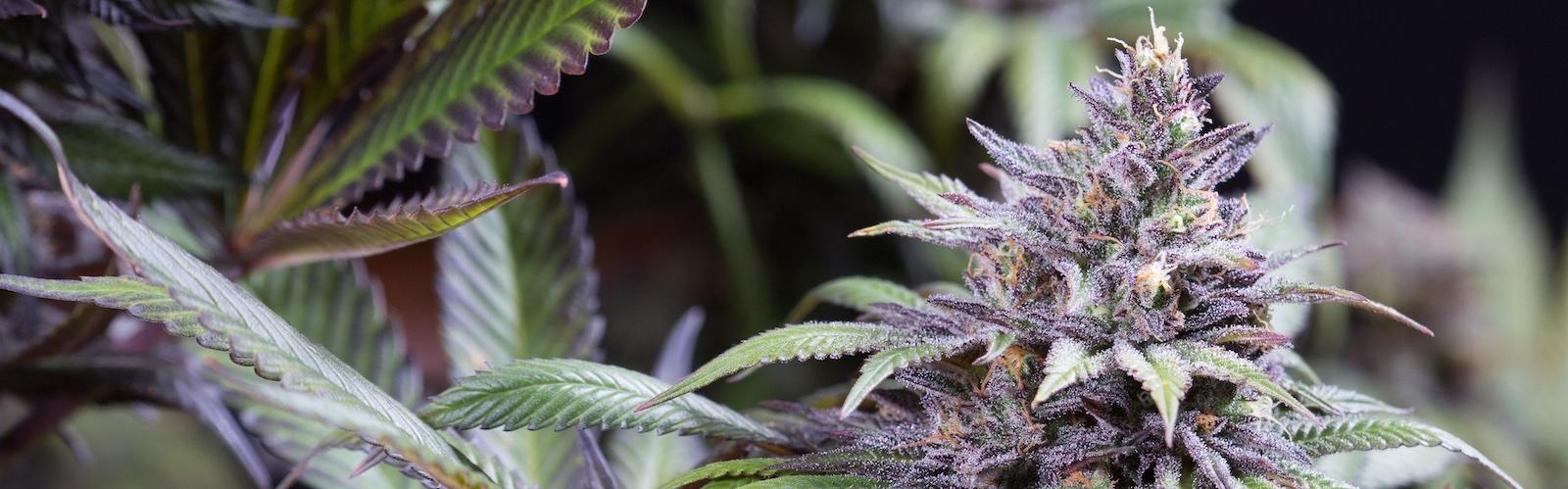
Cannabizetol is a "super-molecule": its unique chemical architecture and remarkable anti-inflammatory potential compel us to rethink what we thought we knew about the plant. Yet its emergence raises a troubling question - how could a compound of such calibre remain hidden through millennia of medicinal use and decades of modern science? The answer lies in prohibition and the blind spots of forensic interpretation.
What is Cannabizetol?
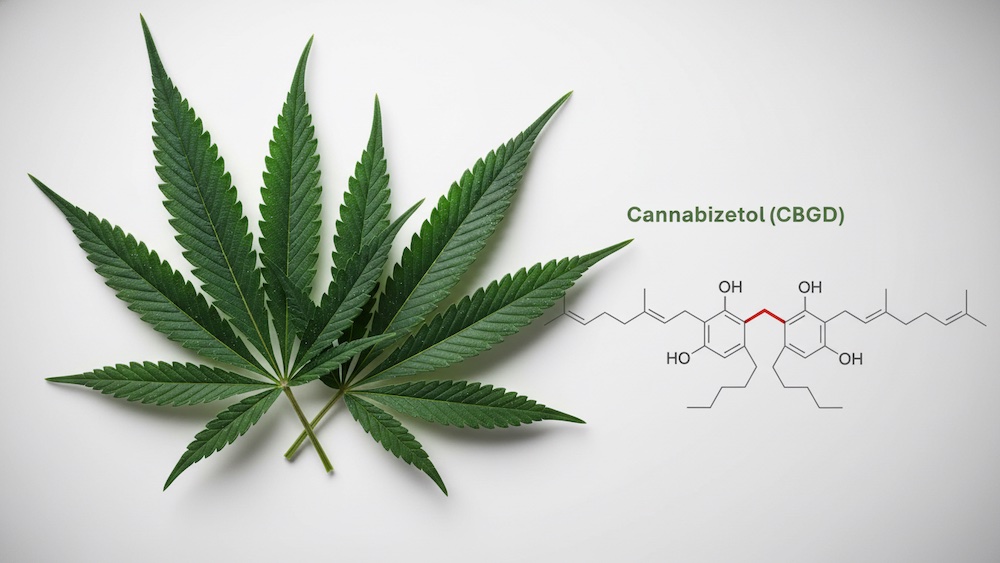
To understand why cannabizetol (CBGD) is so special, picture the familiar cannabinoids (THC, CBD, CBG) as individual Lego bricks. Until recently, scientists assumed the plant assembled its chemistry solely from these loose building blocks (monomers). Cannabizetol defies that rule: it's a dimer, a double-brick molecule.
In plain terms, cannabizetol forms when two molecules of cannabigerol (CBG) - often called the 'stem cell' of cannabinoids - fuse together. They are joined by a chemical methylene bridge that acts as an indestructible hinge, creating a structure much larger and more complex than that of its solitary relatives.
From a chemical perspective, what makes cannabizetol so fascinating is its departure from the familiar pattern. Most cannabinoids - THC, CBD, CBG, CBN, etc. - are monomeric molecules, existing independently and synthesised through well-established biochemical pathways. These begin with cannabigerolic acid (CBGA), which specific enzymes convert into the various cannabinoids we know.
Dimeric cannabinoids are completely different beasts. They are formed when two cannabinoid molecules, whether identical or different, are joined via a methylene bridge, creating a single new molecule with properties that neither possessed individually. This is not a mere mixture nor a simple chemical reaction, but a true molecular fusion that generates novel biological activity.
To date, only four dimeric cannabinoids have been identified in cannabis: cannabizetol (the latest discovery), cannabitwinol, cannabitriol, and cannabiripsol. Four molecules, in a plant known to produce more than 100 cannabinoids. This rarity suggests one of three possibilities: perhaps these compounds exist only in minuscule amounts, perhaps they're chemically unstable and degrade rapidly, or - most convincingly - we have simply not searched for them with sufficient precision.
For this reason, the discoverers - scientists from the University of Milan and the Swiss company Linnea SA - did not choose its name at random. They named it after Zethus, son of Zeus in Greek mythology, known for being the inseparable twin brother of Amphion. Just as Zethus stood out for his physical strength, cannabizetol is distinguished by a chemical and biological robustness that its monomeric "siblings" do not possess.
Skin Power, Unlocked
What has truly captured the attention of the scientific community is not merely its unusual structure but its extraordinary capabilities. Preliminary trials indicate that cannabizetol exhibits remarkable anti-inflammatory and antioxidant properties, far surpassing those of previously identified compounds.
In tests carried out on human keratinocytes (the primary cells of our epidermis), cannabizetol demonstrated a unique ability to extinguish cellular inflammation. It acts by blocking the NF-κB pathway, a master switch that our cells activate when stressed or attacked. By halting this signal, cannabizetol effectively suppressed the production of Interleukin-8 (IL-8), a key driver of chronic inflammation in conditions such as psoriasis or dermatitis.
This finding suggests that the future of cannabis-based cosmetics and dermatological therapies may not belong to the famous CBD but to this newly identified molecular giant that, until recently, was entirely unknown.
The Scar of Prohibition
This brings us back to the great unknown: Why now? Why in 2025? The truth is that the global prohibition of cannabis acted as a scientific deep freeze. For over half a century, chemical research was practically paralysed.
The few scientists permitted to study the cannabis plant often relied on police seized material: old cannabis samples, poorly stored in evidence lockers and degraded by heat and time. This lack of access to fresh, high-quality plant matter created a historical bias. When chemists encountered unusual signals in their analyses (i.e., peaks that did not correspond to THC or CBD), they wrote them off as artefacts - impurities caused by degradation or poor preservation.
For years, dimers such as cannabisol (discovered in 2012) were dismissed as chemical debris, thought to arise from ageing cannabis or even from contamination with formaldehyde. The 2025 study has overturned that view. Through total synthesis in the lab, researchers have proven that cannabizetol is neither an error nor a product of decomposition, but a genuine metabolite - a phytochemical jewel that Cannabis sativa produces deliberately, perhaps as an advanced defence mechanism against UV radiation or pests. After decades of misunderstanding, we now see the plant through the lens of cutting-edge botany rather than criminalistics.
Chasing the Invisible with Cutting-Edge Technology
The discovery of cannabizetol also marks a triumph of modern technology. Detecting a trace molecule within the complex chemical matrix of cannabis is far more challenging than finding a needle in a haystack. To achieve this, the Italian-Swiss team stepped past simple isolation from CBG-rich chemotype IV strains. By turning to flow chemistry, they found a way to capture what had once been invisible.
This technique, more typical of aerospace engineering than classical botany, enables chemical reactions to be carried out in microscopic tubes under high pressure and tightly controlled temperatures. That's how the team managed to synthesise enough cannabizetol to confirm its identity and assess its effects - a process that would have been slow and inefficient with traditional methods. Their strategy is brilliant: by creating analytical standards in the lab, they've given science the tools to spot cannabizetol in cannabis itself, and to uncover the conditions that bring it to life.
A New Horizon for Growers and Patients
The discovery of cannabizetol is not the end of the road but the beginning of a new chapter. It confirms that the cannabis plant is far more complex than previously understood, and strongly suggests that additional dimeric "siblings" remain undiscovered. Could dimers arise from the union of THC and CBD? What properties might they reveal? The door to these possibilities now stands open.
For the cannabis community, this underscores the importance of genetic diversity. CBG-rich strains, once overlooked, may prove to be the natural factories of the next dermatological revolution. As legalisation advances and science makes up for lost time, cannabis is no longer viewed merely as a source of THC but as a pharmacological bio-factory whose instruction manual we're only just beginning to decipher.
Cannabizetol isn't just a scientific curiosity - it is a reminder of opportunity lost. Each compound uncovered today reflects decades of delayed research, lost medical applications, and therapeutic potential that might have helped millions of people. The truly exciting prospect is this: if new classes of compounds are still emerging now, imagine what could be revealed with full research funding, open institutional access, and the same scientific resources devoted to pharmaceutical and agricultural innovation.
Cannabizetol stands as living proof that, even in 2025, nature continues to guard its deepest secrets - revealed only to those with the freedom and patience to look closely.
Comments from our readers
There are no comments yet. Would you like to be the first?
Leave a comment!Did you like this post?
Your opinion about our seeds is very important to us and can help other users a lot (your email address won't be made public).