


- With the continuous advancements in lighting for cannabis cultivation, achieving a more precise and efficient light distribution in critical areas of the plants has become a necessity.
- Recent research has shown that supplemental lighting techniques, specifically lateral (or intercanopy) lighting and lower (or under-canopy) lighting, can significantly increase both the quality and yielding capacity of cannabis.
- Controlled studies have shown increases of up to 30% in the total yield, with notable improvements in the density and quality of the buds from the middle and lower parts of the plants.
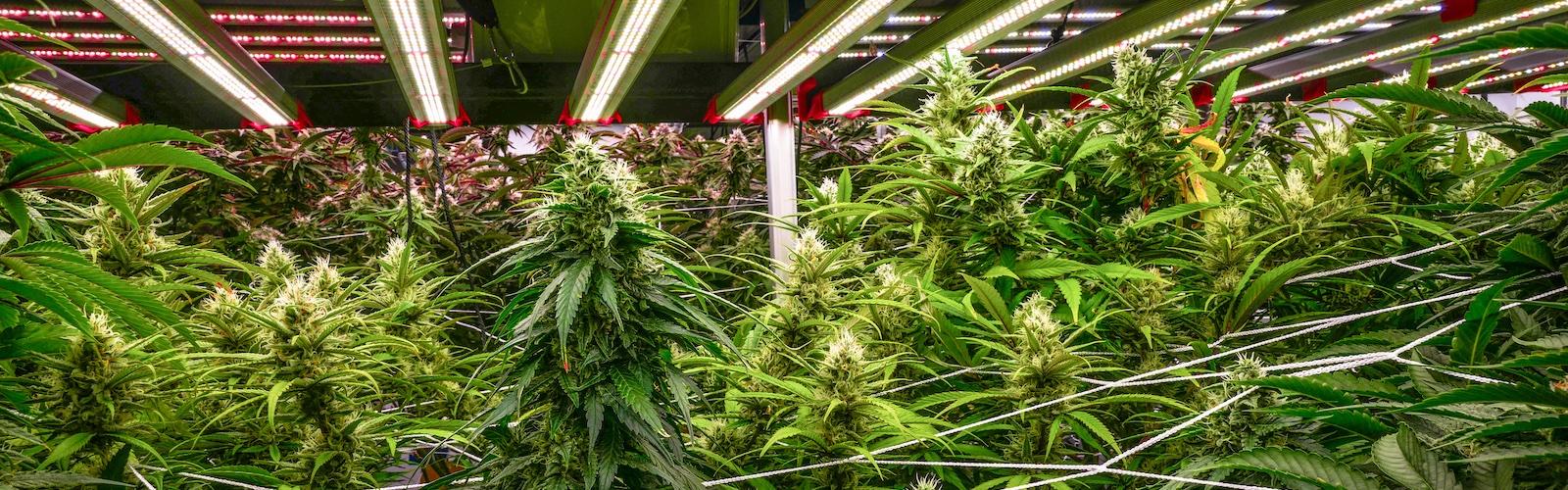
Traditional lighting for indoor cultivation relies primarily on overhead systems, where lights are positioned exclusively above the plant canopy. However, this approach has significant limitations in terms of light penetration.
The leaves on the top of the canopy absorb over 90% of the light from above, leaving the middle and lower parts of the plant in suboptimal lighting conditions. This issue is particularly aggravated in cannabis growing due to the rapid growth of plants and the formation of dense structures that create pronounced shadow zones.
Uneven light distribution results in a phenomenon known as "popcorn buds" on the lower parts of the plants. These buds are significantly smaller in terms of size, density, and potency when compared to the top colas. This represents a considerable economic loss for commercial growers who seek to maximise the amount of high-quality material.
Supplemental Lighting: Maximising Light Penetration
As a C3 plant, cannabis has the capacity to absorb and use very high light intensities (up to approximately 1,400 μmol/m²/s of photosynthetically active radiation or PAR). This physiological trait allows plants to respond positively to supplemental lighting strategies, as long as they stay within optimal parameters to avoid light stress. These strategies can take two main forms:
Intercanopy lighting involves strategically placing light sources within the plant canopy, typically at mid-level. This technique uses horizontal or angled LED bars positioned between rows of plants, allowing the light to directly reach the shaded areas inside the foliage.
Under-canopy lighting represents a different approach, with light sources placed beneath the foliage (generally on the grow bed or on the ground), projecting the light upwards to illuminate the underside of the leaves and the flowering shoots of the lower branches. This technique is based on the principle that leaves can photosynthesise both their upper and lower surfaces, although with different levels of efficiency.
Both methods aim to reduce shaded areas, improve light penetration, and ensure that the lower buds receive sufficient light energy, thereby improving overall quality and yield. However, under-canopy lighting presents certain limitations, as the photosynthetic efficiency of the underside of leaves is generally lower than the upper surface, which may result in slightly reduced energy returns when compared to intercanopy lighting.
Modern LED systems are particularly suitable for this application due to their low heat output and modular bar design, which enables their integration into tight spaces without causing additional thermal stress to the plants - a critical factor given the close proximity of the light sources to leaves and flowers.
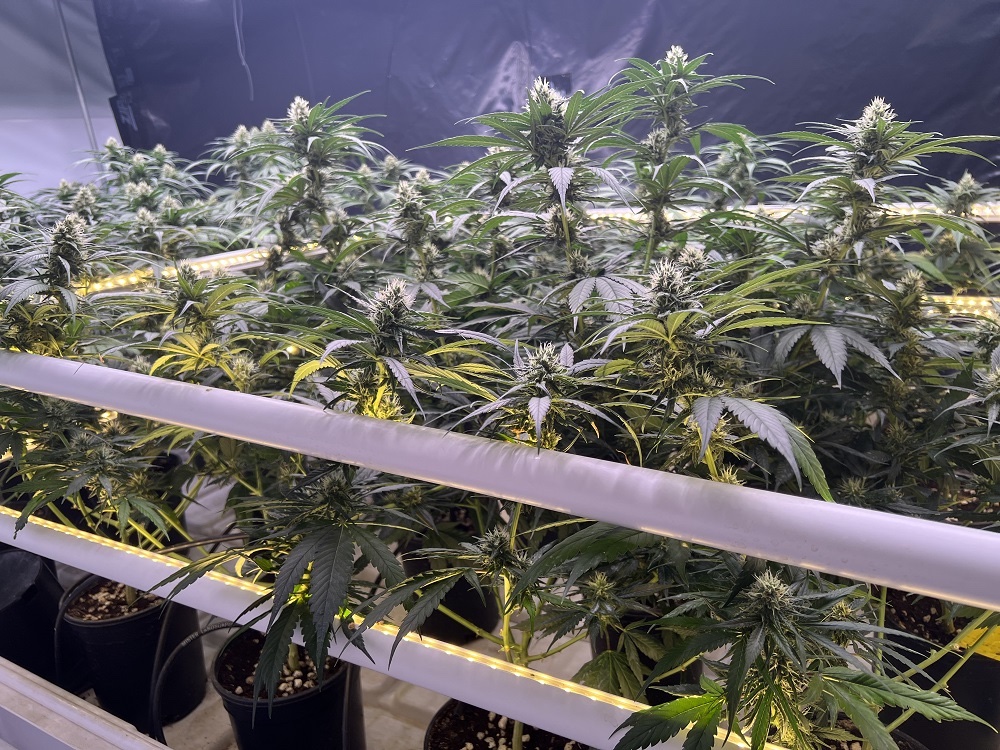
The Plant Structure Determines the Best Supplemental Lighting Method
Some cannabis strains, such as sativa varieties, produce tall and well-branched plants with a more open structure, with space between the branches and a looser canopy. In these cases, intercanopy lighting is more suitable, as the light can penetrate more effectively and reach the middle and lower sections, offering significant potential for yield improvement.
On the other hand, indica strains or certain short, robust hybrids develop a more compact structure, with large, dense leaves which result in a thicker canopy. In these cases, intercanopy lighting may be less effective, so under-canopy lighting may offer better results.
Research-Backed Advantages
Studies conducted at the Philips Cannabis Research Tech Center in the Netherlands have revealed remarkable results with the implementation of supplemental lighting. Contrary to initial expectations that only lower inflorescences would benefit from additional lighting, the results showed that even upper inflorescences experienced significant increases in yield when compared to control groups.
"The entire plant benefits from this. After several grow cycles with different strains, we determined that an average yield increase of 30% can be achieved. Thanks to the use of efficient LED lamps, the increase in biomass per kWh is both consistent and higher", Philips researchers stated.
In addition to quantitative benefits, significant qualitative improvements have been observed, including increased bud density, better uniformity in trichome development, and a more even distribution of cannabinoids and terpenes throughout the plant. These improvements facilitate processing and enhance the consumer experience - both critical factors in competitive markets.
Philips' five-year research into cannabis lighting strategies also confirmed that extreme overhead light levels (1,500–2,000 μmol/m²/s) lead to higher energy costs without delivering the expected yield gains. In contrast, intercanopy lighting has shown to add significant value even at more moderate light levels.
Other long-term studies conducted in commercial facilities have also provided compelling data on the effectiveness of these techniques. For instance, a full year of studies at the 7,200 square foot facility of medical cannabis supplier Texas Original explored various aspects of intercanopy lighting, including light placement and intensity levels, resulting in convincing improvements in cannabis quality and consistency.
Based on this research, they found that intercanopy lighting can help upgrade the quality of flowers on lower branches, turning what would be classified as B- or C-grade buds into a B- or even A-grade product.
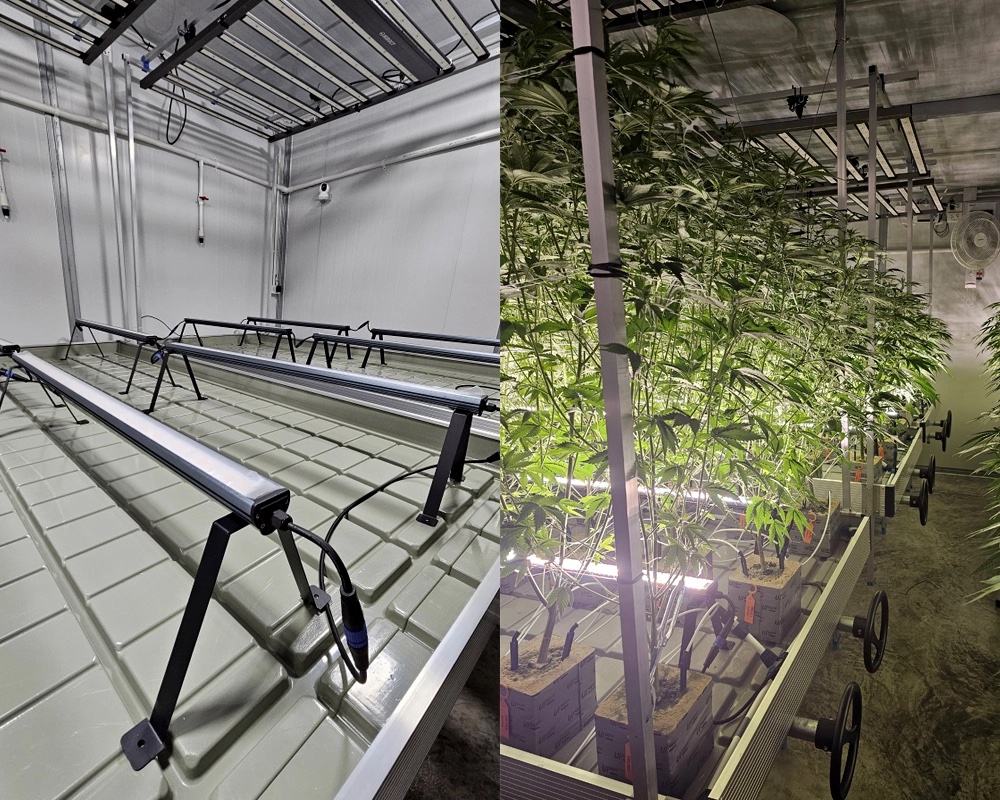
Technical Considerations for Implementation
Research suggests an approximate 60:40 ratio between overhead and supplemental lighting to maximise efficiency. To achieve the optimal light intensity of 1,400 μmol/m²/s, the total power of the lighting system should reach at least 550 watts per square metre. This ratio allows the productivity of the upper parts of the canopy to be maintained while optimising the development of the middle and lower areas.
Growers should note that exceeding 1,400 μmol/m²/s generally does not yield proportional returns in terms of growth, and may lead to inefficient electricity use. The key lies in the strategic distribution of light intensity rather than simply increasing the overall light output.
In terms of light spectrum, research indicates that the specific composition is not critical as long as a full spectrum is maintained with a mixture of white and red LEDs. Modern "full-spectrum" systems are generally suitable for both lateral and under-canopy applications.
Climate management also becomes more complex, as the addition of light sources within and below the canopy can create microclimates with varying temperature and humidity levels. It is therefore essential to maintain adequate airflow to prevent the formation of hot spots and moisture build-up that could encourage the development of pathogens.
A Clear Advancement in Cannabis Lighting
The strategic implementation of supplemental lighting systems marks a significant evolution in the cultivation techniques of indoor cannabis. However, the choice of lighting should be based on specific factors such as the type of grow, the varieties used, and the goals of the harvest. Scientific evidence strongly supports the value of these techniques, with studies demonstrating tangible improvements in both yield and quality.
As the cannabis industry continues to mature and competition intensifies, the adoption of advanced lighting technologies will become a key determinant of commercial success. Growers who implement these strategies effectively will be better positioned to meet the market's demand for high-quality, consistent products.
Comments from our readers
There are no comments yet. Would you like to be the first?
Leave a comment!Did you like this post?
Your opinion about our seeds is very important to us and can help other users a lot (your email address won't be made public).